

Gutters Leaking At Seams
December 20, 2022
Vinyl Gutter Screens : Product Review
December 27, 2022
Loose Gutter Spikes
Why Gutter Nails Pull Loose & How To Prevent
Have you ever noticed large gutter nails sticking out of your gutters? Those nails are commonly referred to as gutter spikes, and most older gutter systems use a spike and ferrule system to secure the gutters to the home. When these gutter spikes begin backing out, it is usually a sign that the gutter system is starting to pull away from the fascia board.
While a few loose gutter spikes may not seem like a major concern, they are often the first warning sign of larger gutter repair issues developing. What starts as a couple loose gutter nails can eventually lead to sagging gutters, standing water, improper pitch, fascia board rot, and in severe cases sections of gutter pulling completely away from the house.
In this article we’ll explain what gutter spikes and ferrules are, why gutter nails come loose, how spike and ferrule systems fail over time, and the best repair solutions available. We’ll also cover when loose gutter spikes can be repaired and when it makes more sense to replace the gutter system altogether.
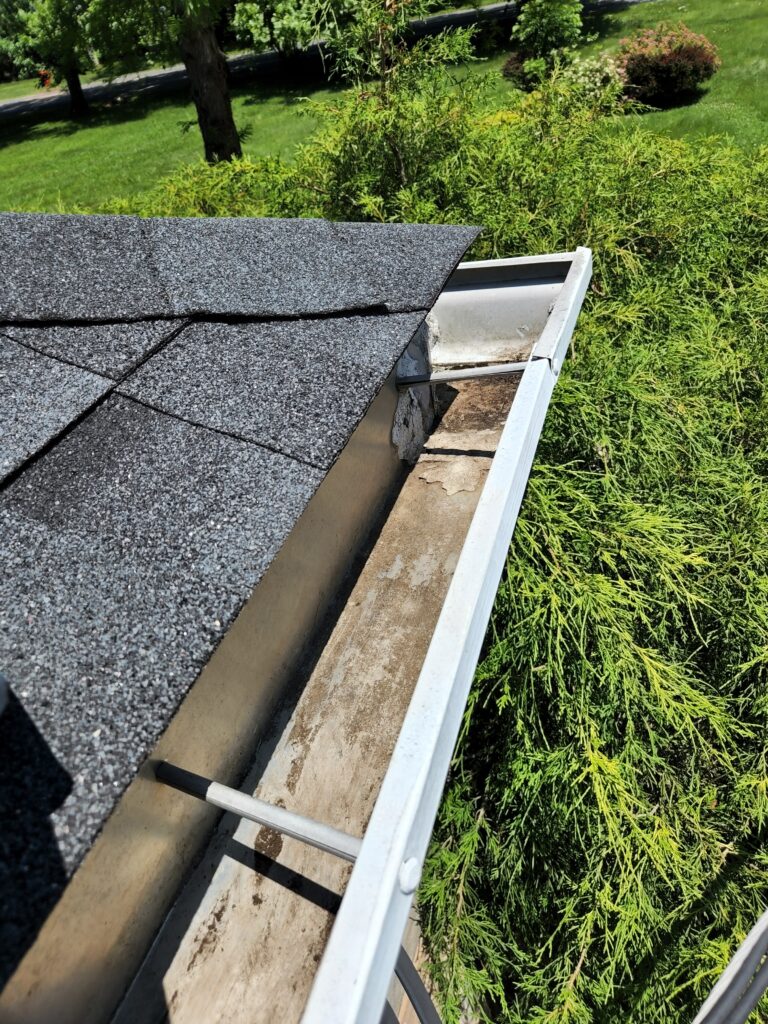
What Are Gutter Spike and Ferrules?
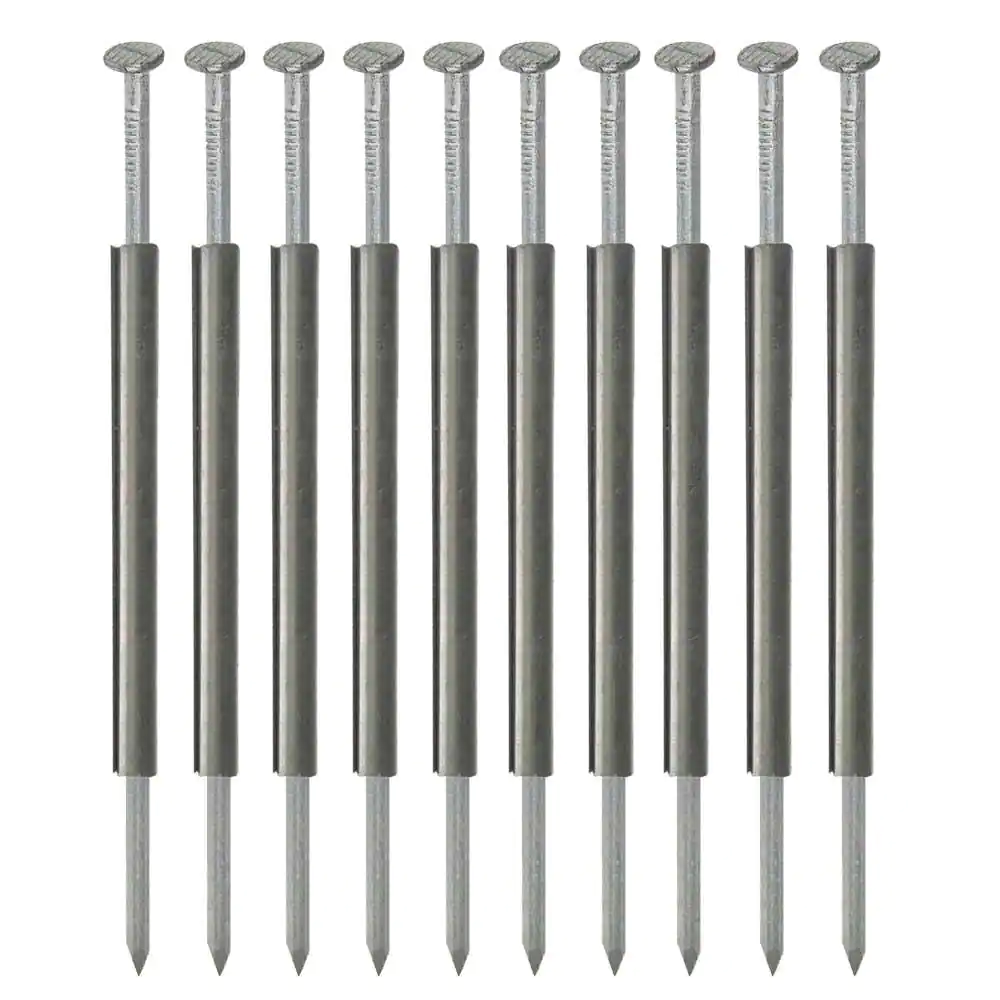
Gutter spikes are large gutter nails used to secure gutters to a home’s fascia board. For many years, spike and ferrule systems were the industry standard for installing residential gutter systems and can still be found on countless homes today.
A gutter spike is driven through the front of the gutter, through a metal tube called a ferrule, and into the fascia board behind the gutter. The ferrule acts as a spacer that helps maintain a consistent and uniform shape of the gutter and prevents the metal from crushing when the spike is driven into place.
Because of their simple design, spike and ferrule hangers were widely used for decades. However, unlike modern screw-in gutter hangers, gutter spikes rely entirely on friction to remain secure. As the gutter system expands and contracts with temperature changes and supports the weight of water and debris year after year, the spikes gradually loosen their grip on the wood.
Once gutter nails begin backing out, they rarely stop on their own. In many cases, loose gutter spikes are the first visible sign that the gutter system needs repair or re-securing.
Problems With Gutter Spikes
After servicing thousands of homes throughout Maryland, we’ve found that loose gutter spikes are one of the most common gutter repair issues homeowners encounter. In fact, aside from clogged gutters, loose gutter nails are probably the single most frequent problem we see on older gutter systems.
The problem with spike and ferrule hangers is that they tend to become less secure over time. Unlike modern screw-in gutter hangers that use threads to grip the fascia board, gutter spikes are essentially large nails. As the gutter system expands and contracts with temperature changes, supports heavy rainfall, and carries the weight of debris year after year, the spikes gradually work themselves loose.
Unfortunately, loose gutter spikes are rarely an isolated problem. Once a few spikes begin backing out, the affected section of gutter loses support. This often causes the gutter to sag, hold water, and place even more stress on the remaining gutter spikes. As a result, additional spikes begin pulling loose and the problem continues to accelerate.
If left unaddressed, what starts as a few loose gutter nails can eventually lead to standing water, improper gutter pitch, overflowing gutters, fascia board damage, and more expensive repairs. For this reason, it is always best to address loose gutter spikes before the problem has a chance to spread throughout the gutter system.
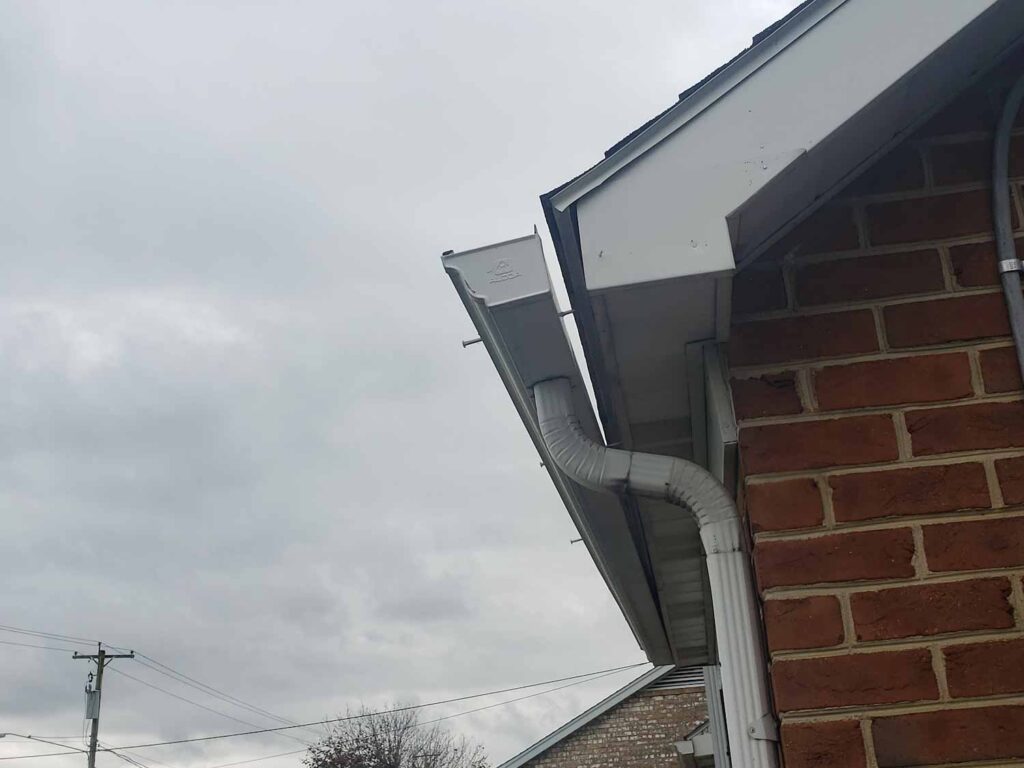
Causes Of Gutter Spikes To Come Loose
While all spike and ferrule gutter systems eventually loosen with age, certain conditions can dramatically accelerate the process. In many cases, loose gutter spikes are a symptom of another problem affecting the gutter system rather than the root cause itself.
Excessive weight, standing water, clogged downspouts, and deteriorating fascia boards all place additional stress on gutter spikes and gutter nails. The longer these issues go unaddressed, the faster the spikes pull loose and the more extensive the repairs become.
Below are the most common reasons gutter spikes begin backing out of the fascia board.
1. TIME
As we’ve previously mentioned, all gutter spikes eventually come loose with age. Unlike modern screw-in gutter hangers, traditional spike and ferrule systems rely on a smooth nail shank to hold the gutter in place.
Over the years, normal expansion and contraction from changing temperatures causes slight movement within the gutter system. Combined with the weight of rainwater, debris, snow, and ice, this movement gradually enlarges the holes surrounding the gutter spikes. As the holes wear out, the spikes lose their holding power and begin backing out of the fascia board.
The good news is that age-related loosening can often be corrected if caught early. However, once gutter spikes start pulling loose, they typically continue to worsen over time unless the system is properly repaired.
2. DOWNSPOUT CLOGS /STANDING WATER IN GUTTERS
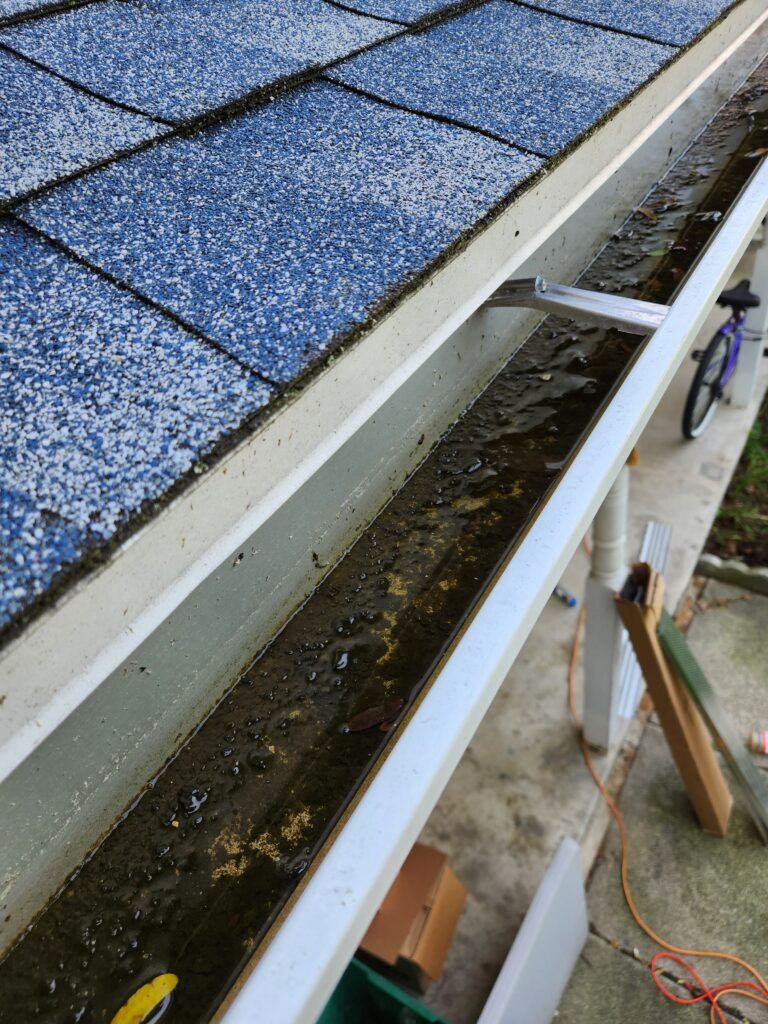
When a downspout becomes clogged, water can no longer exit the gutter system properly. As a result, rainwater begins backing up inside the gutters until it eventually overflows or finds another way to escape.
The problem is that water is extremely heavy. In fact, water weighs significantly more than leaves, sticks, pine needles, acorns, and most other types of gutter debris. During heavy rainfall, a clogged downspout can cause hundreds of pounds of water to remain trapped inside the gutter system.
This excessive weight places tremendous strain on gutter spikes and ferrules. As the gutters become heavier, the gutter nails begin pulling away from the fascia board. Once a few gutter spikes loosen, the affected section often starts to sag and lose its proper pitch. That sagging area then collects even more water, which creates additional weight and causes even more spikes to pull loose.
This cycle tends to accelerate over time. What begins as a simple downspout clog can eventually lead to standing water, loose gutter spikes, overflowing gutters, fascia board damage, and costly repairs if left unaddressed.
3. FASCIA BOARD ROT OR SOFTNESS
Gutter spikes and ferrules depend entirely on the fascia board for support. While loose gutter spikes are often blamed for a failing gutter system, the real problem is sometimes the wood behind the gutters.
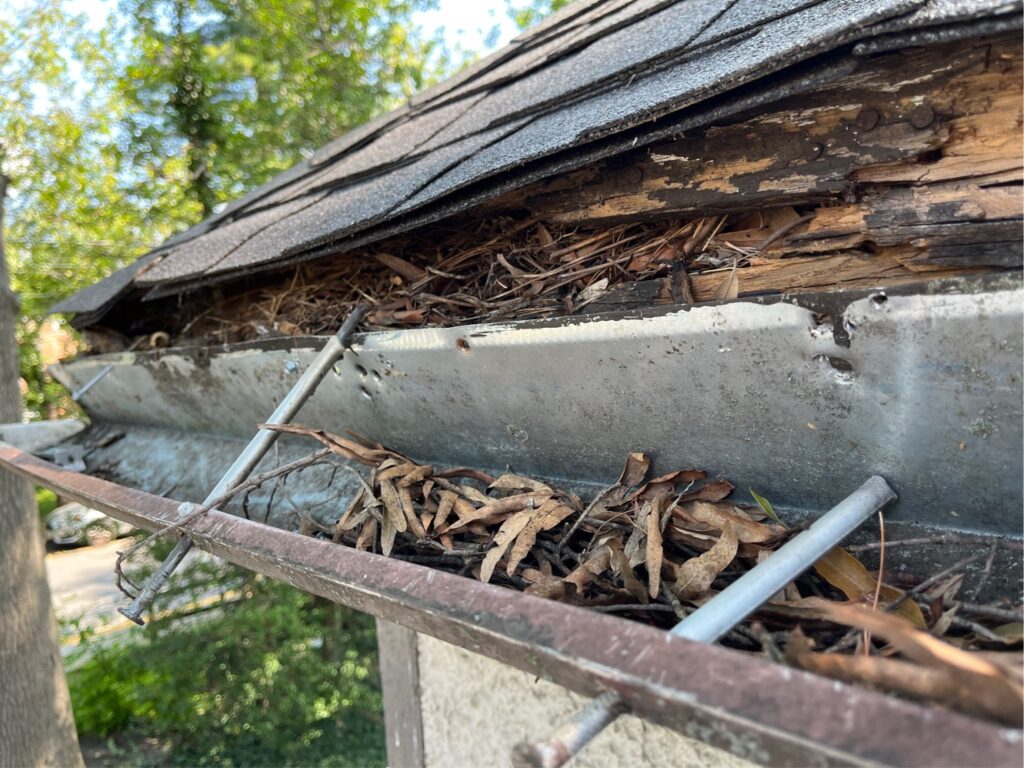
When fascia boards become soft, rotten, or deteriorated from prolonged moisture exposure, they lose their ability to hold gutter nails securely. As a result, gutter spikes begin pulling loose regardless of how many times they are hammered back into place.
In many cases, homeowners notice a few loose gutter spikes and assume the gutters simply need to be re-secured. However, if the fascia board has become soft, the spikes may continue backing out because there is no longer solid wood for them to grip.
Rotten fascia boards are often the result of years of overflowing gutters, standing water, leaking gutter seams, or gutters that have been allowed to remain loose for extended periods of time. Once water begins reaching the wood regularly, deterioration tends to accelerate quickly.
The photo above shows a gutter pulling away from severely deteriorated fascia board. While the gutter spikes appear to be failing, the underlying issue is that the wood itself can no longer support the weight of the gutter system.
Unfortunately, once fascia board rot has begun there is no way to reverse the damage. The affected wood must be replaced before the gutter system can be properly secured again. In situations like these, simply driving the gutter spikes back into place is only a temporary fix.
4. GUTTER NEGLECT
In many cases, loose gutter spikes are the result of years of neglected gutter maintenance. Debris accumulation, clogged downspouts, standing water, and overflowing gutters all place additional strain on spike and ferrule systems.
When these issues are allowed to persist season after season, gutter nails gradually pull loose, gutters begin to sag, and drainage problems become worse. While gutter spikes naturally loosen with age, a neglected gutter system will typically fail much faster than one that is properly maintained.
Why Gutter Spikes Keep Coming Loose
One of the most frustrating things about loose gutter spikes is that they often continue coming loose even after being hammered back into place.
The reason is simple: each time a gutter spike pulls loose, it slightly enlarges the hole in the fascia board. While tapping the spike back in may temporarily secure the gutter, it does not restore the wood that was lost. As a result, the spike has less holding power each time it is driven back into place.
Once a few gutter nails begin pulling loose, the affected section of gutter often starts to sag and collect water. This additional weight places even more stress on the spike and ferrule system, causing the problem to accelerate over time.
For this reason, repeatedly hammering loose gutter spikes back into place is rarely a permanent solution.
Upgrading From Spike And Ferrule Systems
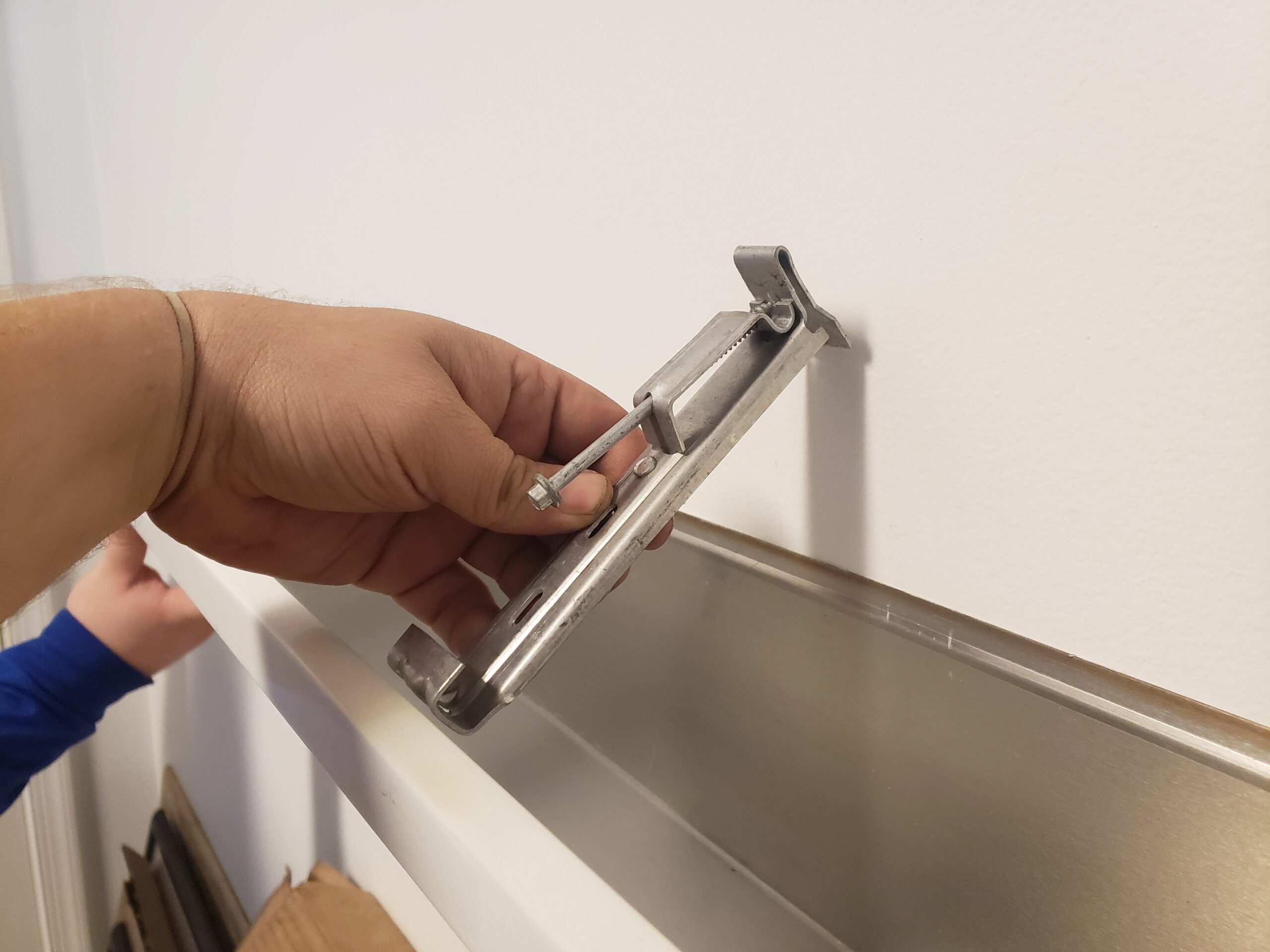
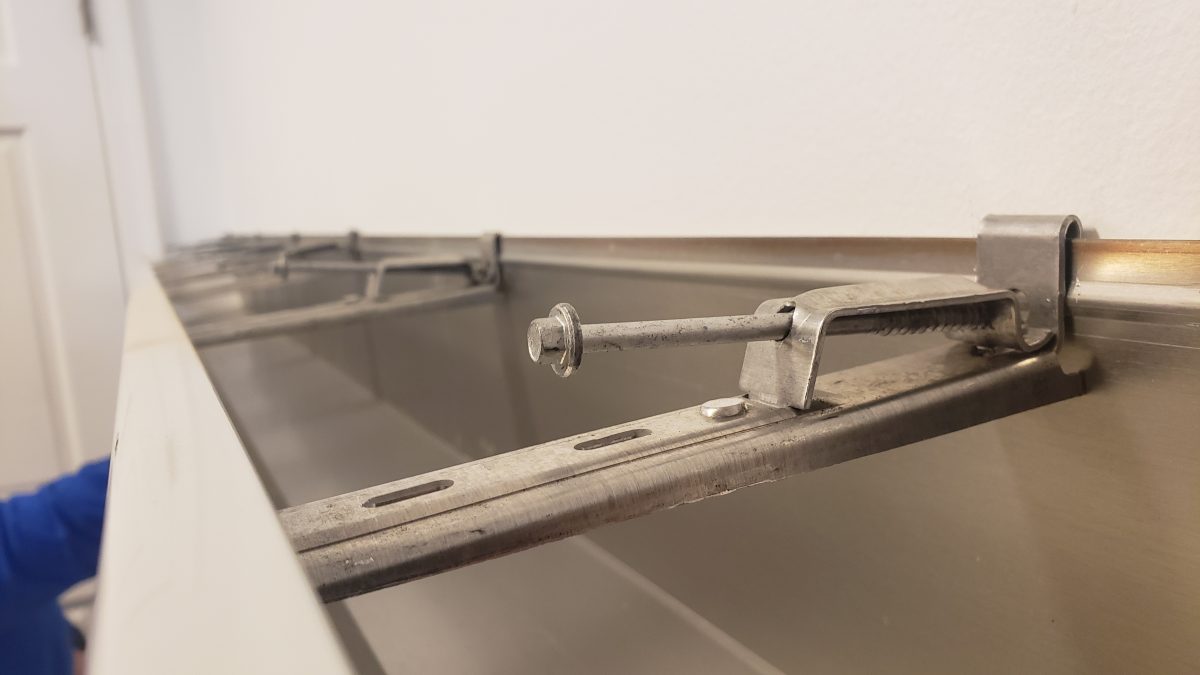
If gutter spikes continue coming loose in the same areas, it is often a sign that the spike and ferrule system has reached the end of its useful life. Rather than repeatedly hammering gutter nails back into place, many homeowners choose to upgrade to modern hidden hangers.
Unlike gutter spikes, hidden hangers use threaded screws that securely fasten the gutter system to the fascia board. The threaded design provides significantly more holding power and is far less likely to loosen over time.
In addition to being stronger, hidden hangers help create a more uniform and secure gutter system. When properly installed, they distribute weight more evenly and provide better support during heavy rain, snow, and debris loads.
For these reasons, screw-in hidden hangers have become the industry standard and are the preferred repair method for most loose gutter spike repairs.
When Is It Time To Replace The Gutters
In many cases, loose gutter spikes can be repaired by re-securing the gutter system with modern hidden hangers. However, there comes a point when repairing an aging gutter system is no longer the most practical solution.
Replacement may be worth considering if loose gutter spikes are appearing throughout the entire system, the gutters have developed significant pitch problems, or sections of gutter are repeatedly pulling away from the home. Extensive rust, severe denting, separated seams, and widespread fascia board damage are also signs that the gutter system may be nearing the end of its service life.
A good rule of thumb is that if you’re constantly repairing the same gutters year after year, replacement may be the more cost-effective long-term option. While repairs can often extend the life of a gutter system, they cannot stop the natural aging process.
If you’re unsure whether your gutters should be repaired or replaced, a professional inspection can help determine which option makes the most sense for your home and budget.
Conclusion
Loose gutter spikes are one of the most common gutter repair issues found on older gutter systems. While they may seem like a minor problem at first, they are often an early warning sign of larger issues developing within the gutter system.
What begins as a few loose gutter nails can eventually lead to sagging gutters, standing water, pitch problems, fascia board damage, and more costly repairs if left unaddressed. The good news is that most loose gutter spikes can be repaired when caught early, often by upgrading the existing spike and ferrule system to modern hidden hangers.
However, if the gutters are repeatedly pulling loose, suffering from extensive damage, or nearing the end of their service life, replacement may be the more practical long-term solution.
If you’ve noticed loose gutter spikes, loose gutter nails, or gutters pulling away from your home, addressing the problem sooner rather than later can help prevent more expensive repairs down the road.
CLICK HERE TO GET A FREE QUOTE NOW
CHECK OUT OTHER ARTICLES BY MY GUTTER DOCTOR
Gutters Leaking From Behind by My Gutter Doctor
Fascia Board Replacement by My Gutter Doctor
Gutters Leaking At Seams by My Gutter Doctor
Downspout Clog Prevention by My Gutter Doctor
MY GUTTER DOCTOR
93 Monocacy Blvd. A-6
Frederick, MD 21701
301-820-3209