

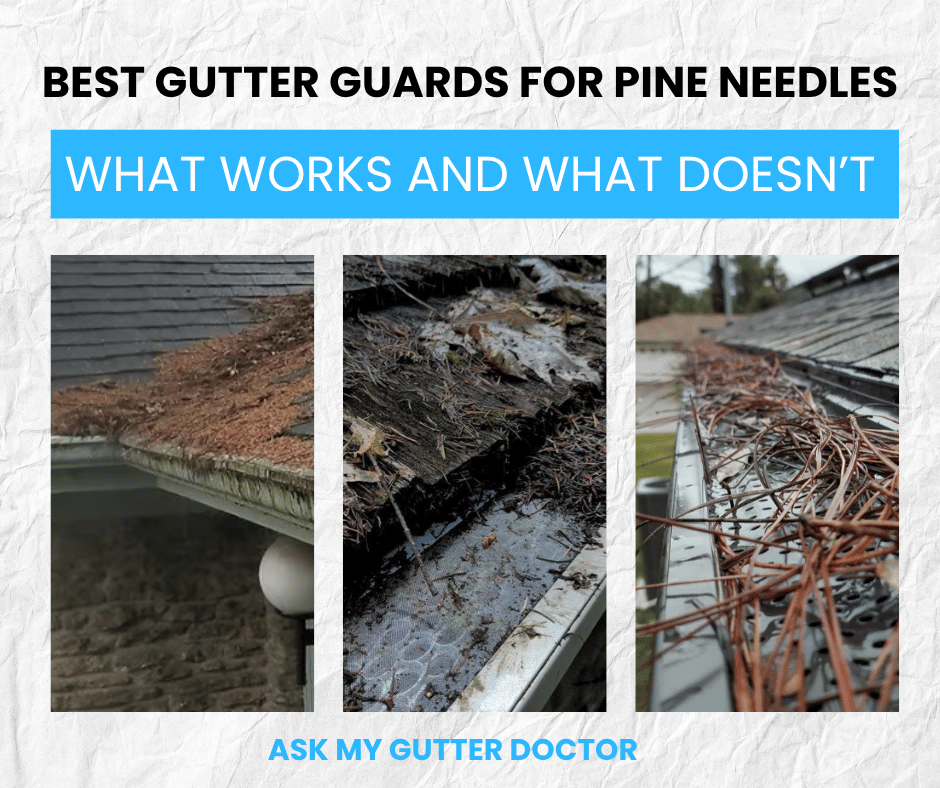
Best Gutter Guards For Pine Needles: What Works & What Doesn’t
March 22, 2026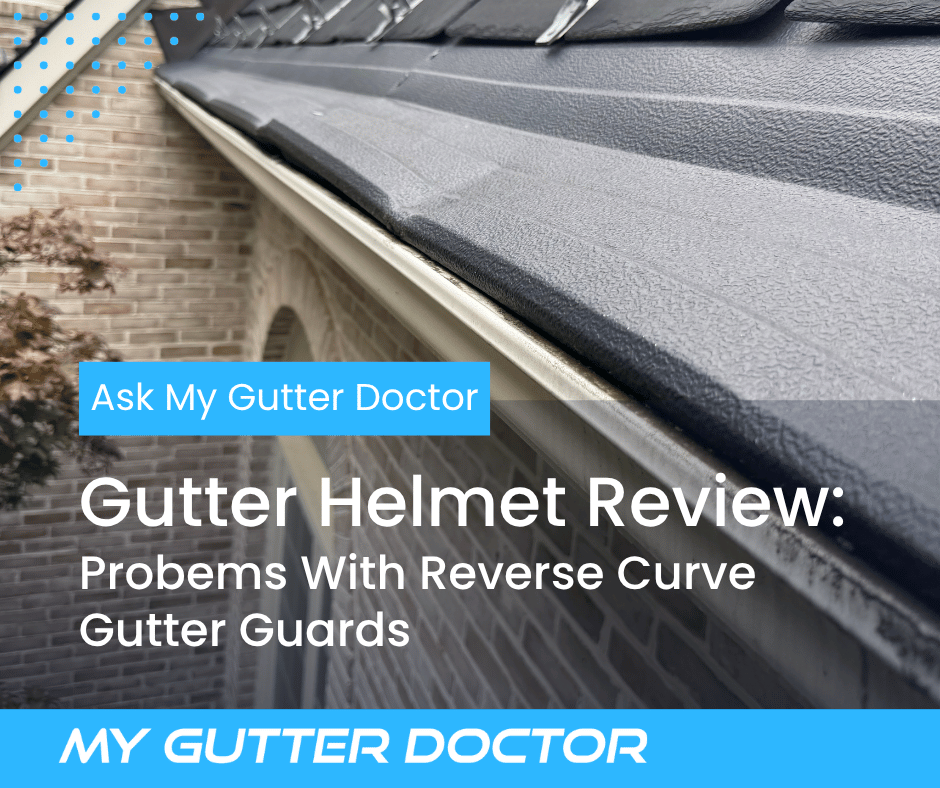
Gutter Helmet Review: Problems With Reverse Curve Guards
Reverse curve gutter guards, commonly referred to as gutter helmet or gutter hoods, are designed to cover the entire gutter opening with a solid hood.
Instead of water dropping straight into the gutter, reverse curve systems rely on surface tension to guide it around a curved edge and into the gutter, while leaves and debris are meant to slide off and fall to the ground.
In theory, this design creates a low-maintenance and worry-free system. However, it doesn’t always work out that way over time.
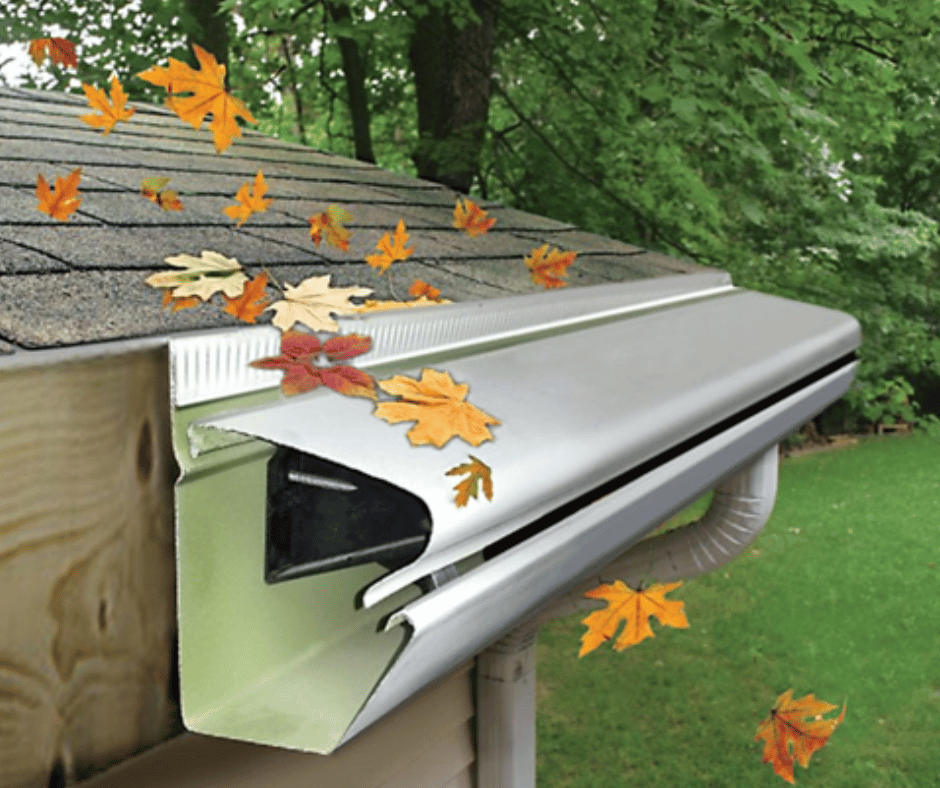
Popular reverse curve helmet style covers include:
-
Gutter Helmet
-
Leaf Guard
-
Gutter Shutter
-
K Guard
-
Thompson Creek
All of these brands fall under the same reverse curve category of gutter guards. For simplicity, we’ll use the term “gutter helmet” as a general reference for this style of system, as it’s the most commonly used term.
In this article, we’ll break down how these systems are supposed to work and what tends to happen after they’ve been installed for a few years.
How Do Gutter Helmets Work?
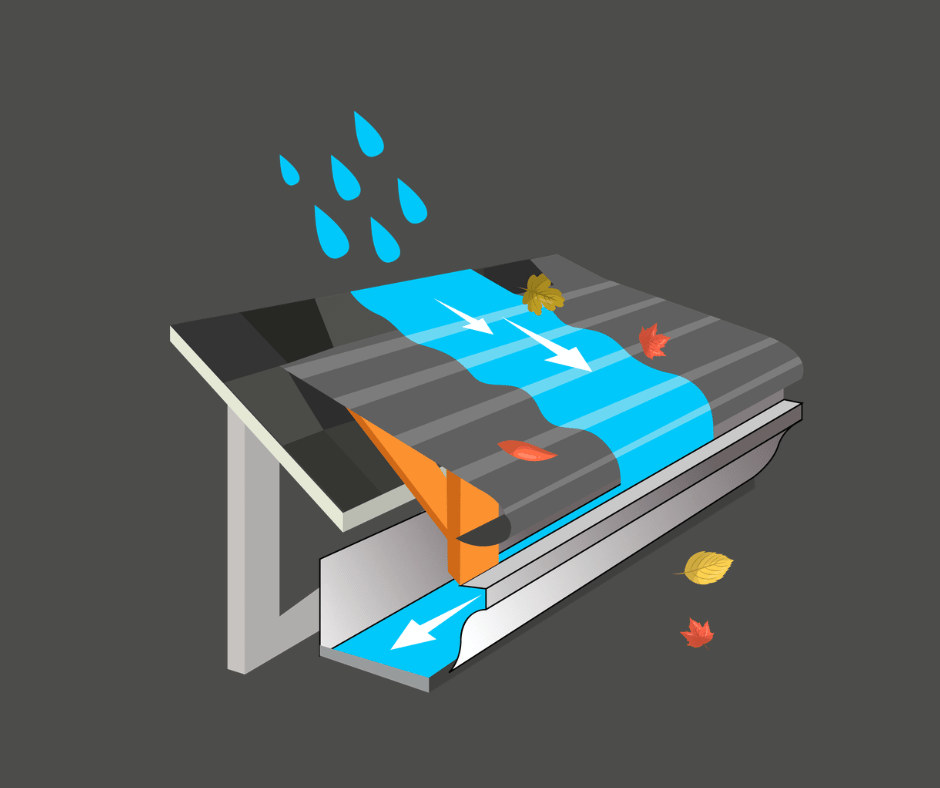
Helmet style gutter guards are designed to control how water enters the gutter using a reverse curve at the front edge. Instead of water dropping straight into the gutter, rainwater is directed across this curved surface. As the water flows down the hood, it’s meant to cling to the reverse curve through surface tension, allowing it to wrap around the edge and drip into the gutter system.
At the same time, reverse curve guards are designed so that leaves and larger debris continue past the edge and fall to the ground rather than enter the system. For this to work properly, the front edge needs to stay smooth and aligned so water can maintain contact as it curves into the gutter. If that contact is interrupted, even slightly, the water can separate and fall away from the system instead.
Over time, this reliance on surface tension becomes a weak point, especially as the front edge develops slight waves or imperfections that cause water to overshoot the gutter instead of entering it.
Common Problems With Gutter Helmets Over Time
-
Water Overshooting In Heavy Rain
-
Surface Tension Failure Over Time
-
Structural Weakness/Damage Easily
-
Allow Debris Into The System
-
Difficult Maintenance & Removal
-
Attracts Bees, Birds, & Snakes
Water Overshooting In Heavy Rain
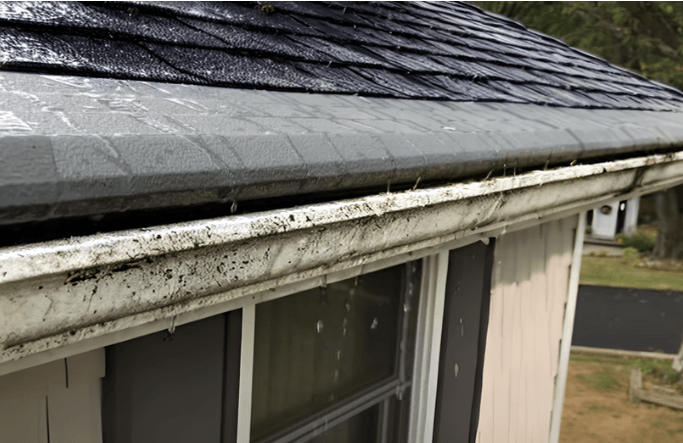
One of the most common issues with gutter helmets is water overshooting the gutter during heavier rain.
When rainfall increases, so does the speed and volume of water coming off the roof. Instead of slowing down and wrapping around the reverse curve, water can move too fast to maintain contact with the surface. When that happens, it simply continues past the edge and cascades over the front of the gutter splashing to the ground below.
This is especially noticeable in areas where water naturally concentrates or accelerates, such as roof valleys where two or more sections of roof come together. The faster the water is moving, the harder it is for surface tension to work as intended, especially in large volumes.
Roof type plays a major role as well. Surfaces that shed water quickly, like metal, slate, steep pitch roofs, or roofs with solar panels, increase water speed even more, making overshooting more likely.
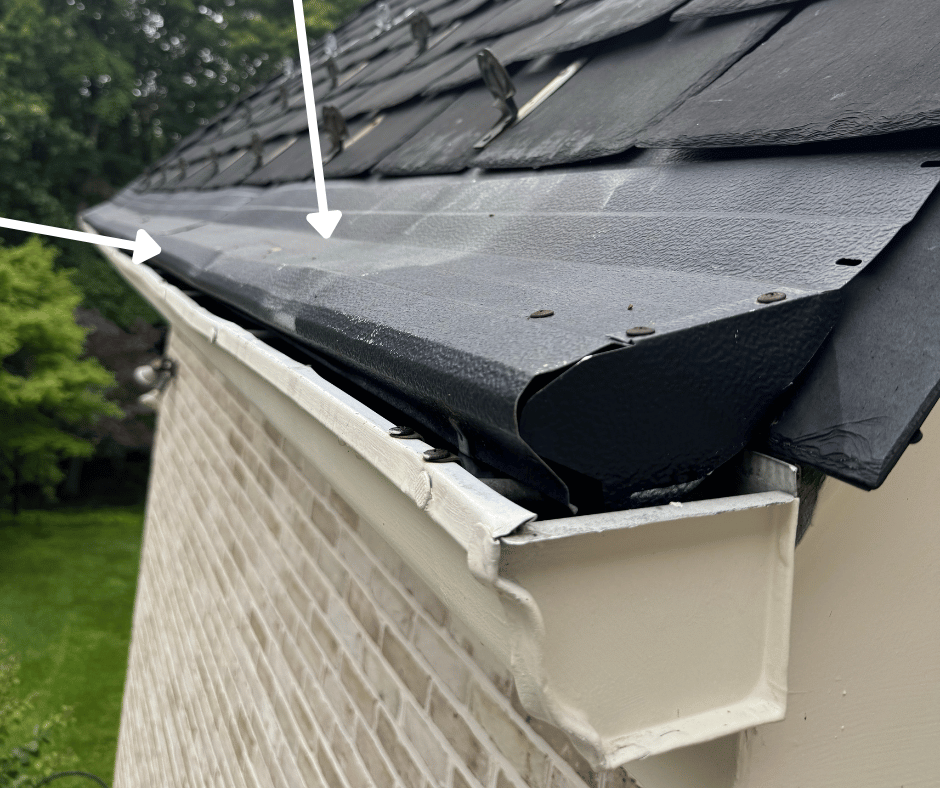
Once this starts happening, the system is no longer doing what gutters are meant to do. Instead of collecting and directing water away from the home, it allows it to spill over the edge, often right along the foundation line. This issue becomes more noticeable over time, especially as the front edge of the system develops slight waves or imperfections that further disrupt surface tension.
Surface Tension Failure Over Time
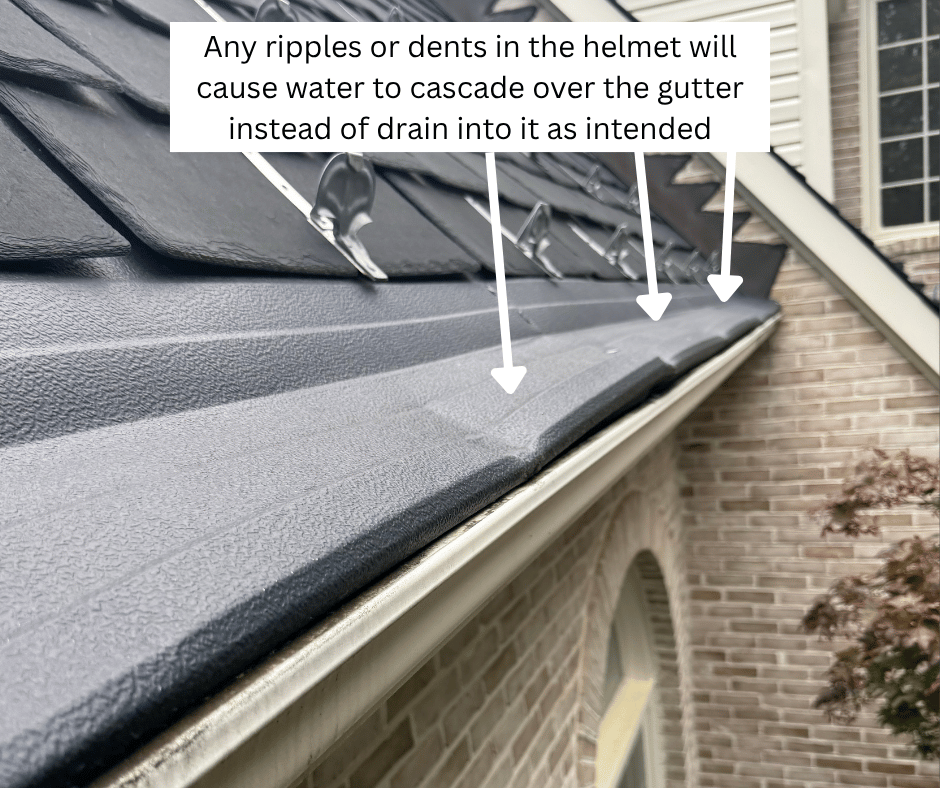
The entire function of a reverse curve system depends on one thing, consistent surface tension along the reverse curve. When these systems are new the front edge is smooth with minimal imperfections, while everything works as intended for the most part.
Over time, the helmet rarely stays perfect. Small changes begin to develop such as:
- Slight warping
- Minor dents from branches or debris
- Stress from snow and ice buildup
- Subtle waviness between bracket supports
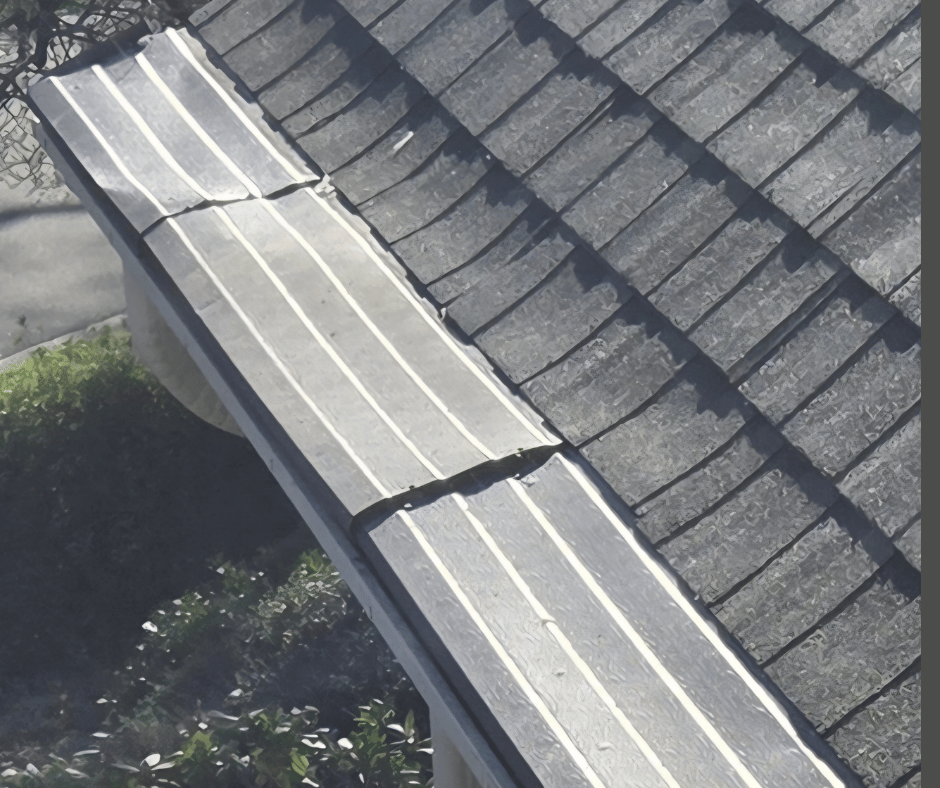
These imperfections may seem minor, but they have a direct impact on how water behaves. Instead of following a clean, consistent curve, surface tension is disrupted by waves in the surface. As a result, even slight ripples can cause water to break away from the surface tension and waterfall over the gutter instead of entering the system.
This is why performance often declines gradually. What works when the system is new can change over time as the front edge loses its uniform shape. Once surface tension becomes unreliable, water begins to overshoot the gutter, even during moderate rainfall.
Structural Weakness/Damage Easily
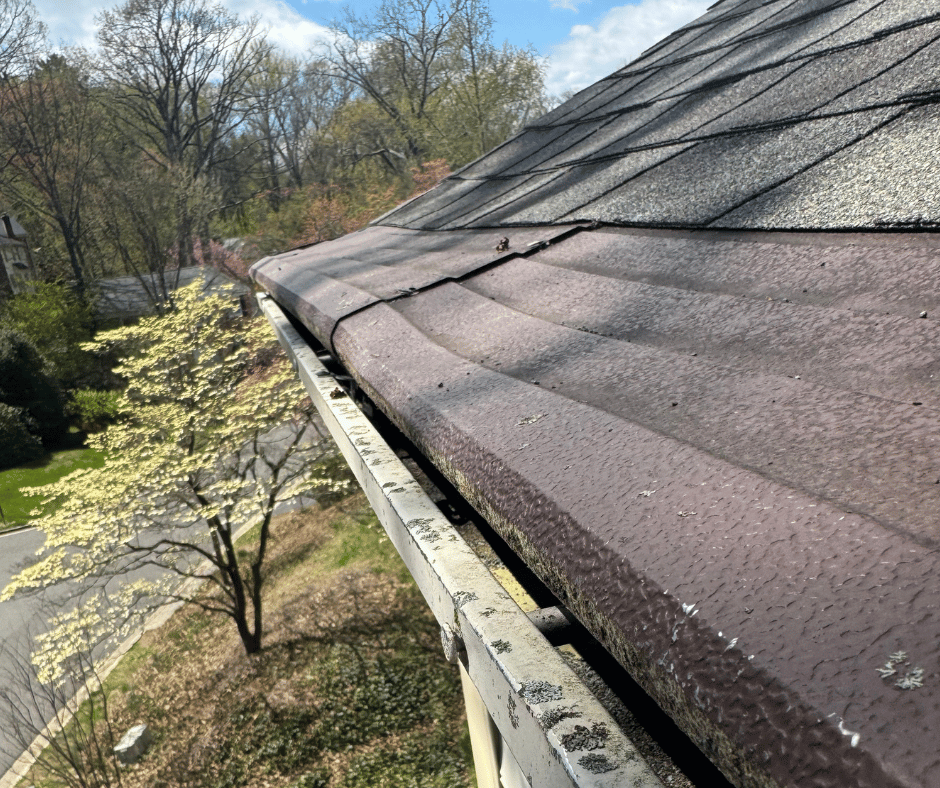
Helmet style gutter systems are not built on a continuous, rigid frame. Instead, they rely on spaced brackets to support the hood, which creates weak points between each support. In areas with snow and ice, this becomes a problem. As snow accumulates along the roof edge, it adds weight and stress across those unsupported sections. Over time, this can cause the helmet to bend, sag, or slightly deform between brackets. Fast moving snow or ice (roof avalanches) can also cause significant, often irreparable damage to any reverse curve system.
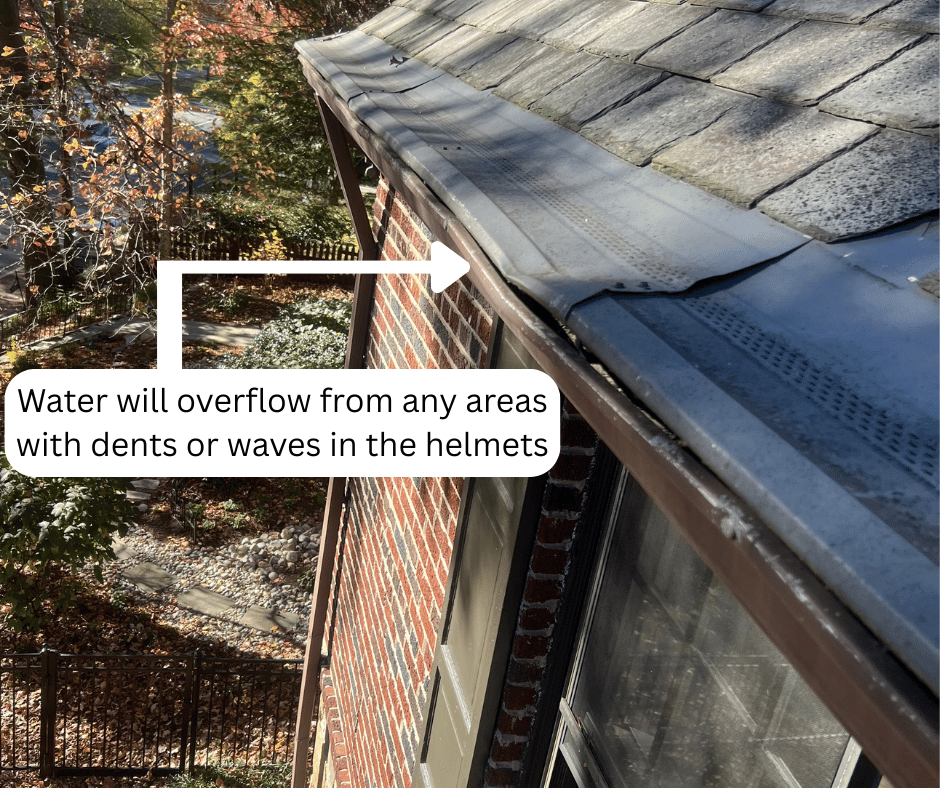
Because the design depends on maintaining a consistent shape, it doesn’t take much movement to affect performance. Even minor impacts from branches or debris can create small changes along the edge. Once the system loses its shape, it typically does not return to its original form. Those slight bends or waves remain, and as a result, the surface tension design no longer works as intended.
Gutter Helmets Can Still Let Debris In
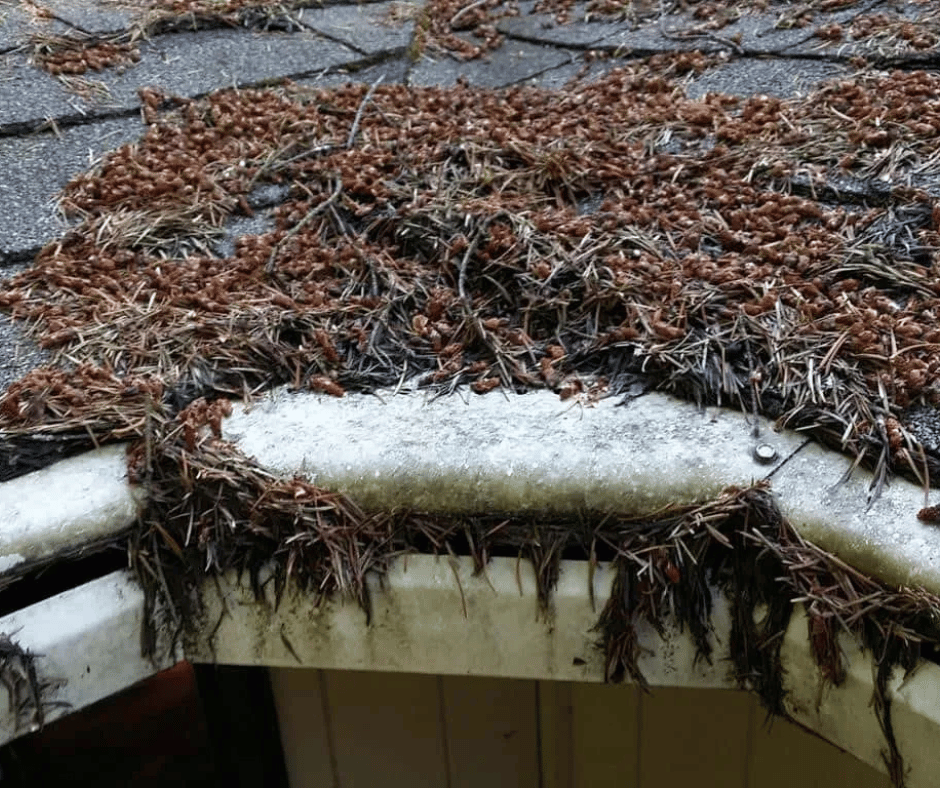
Gutter helmet systems are designed to keep debris out, but in many cases, they can still allow smaller materials into the gutter.
Along the entire front edge of the system, there is a continuous opening between the gutter and the helmet. This is where water enters the system. While this gap is meant to block larger debris, it often allows smaller materials like pine needles, seed pods, and fine organic debris to pass through. Some designs attempt to address this by adding a small grate or screen over the opening. However, these can create their own issues. Fine debris tends to collect at that entry point, eventually restricting water flow and creating a clog at the surface.
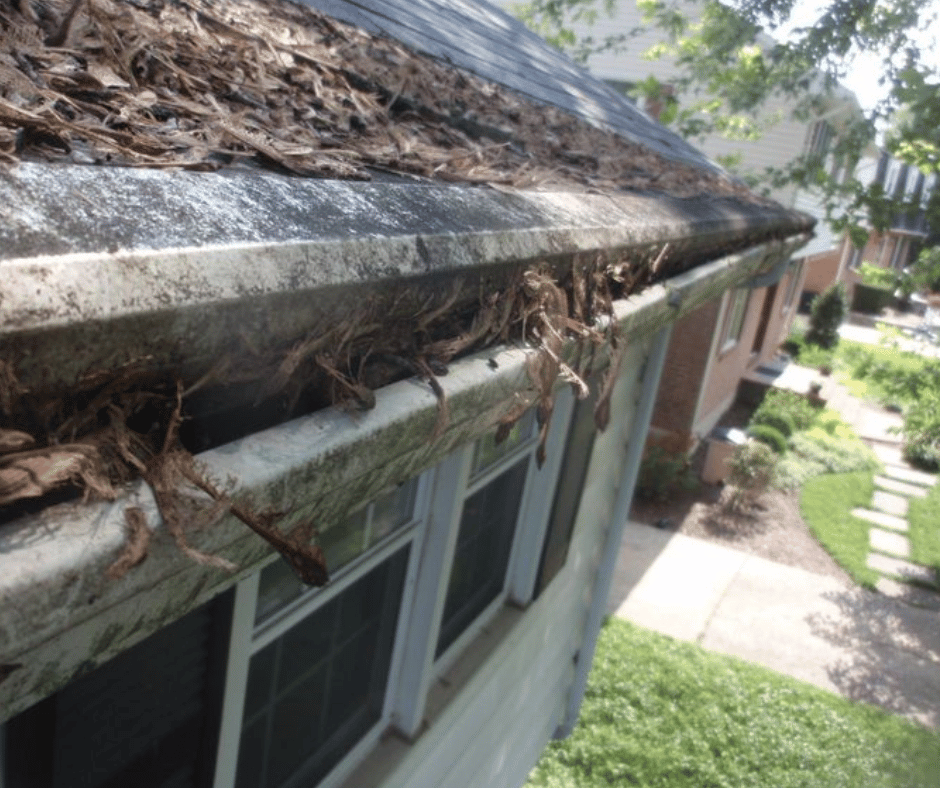
Systems without a grate avoid that front edge buildup, but instead allow debris to enter the gutter more freely. Once inside, that material can accumulate over time. What gets through often depends on the type of debris and the design of the system. For example, maple leaves may shed off the edge as intended, while smaller items like maple seed pods in the spring can slip through the opening and collect inside the gutter.
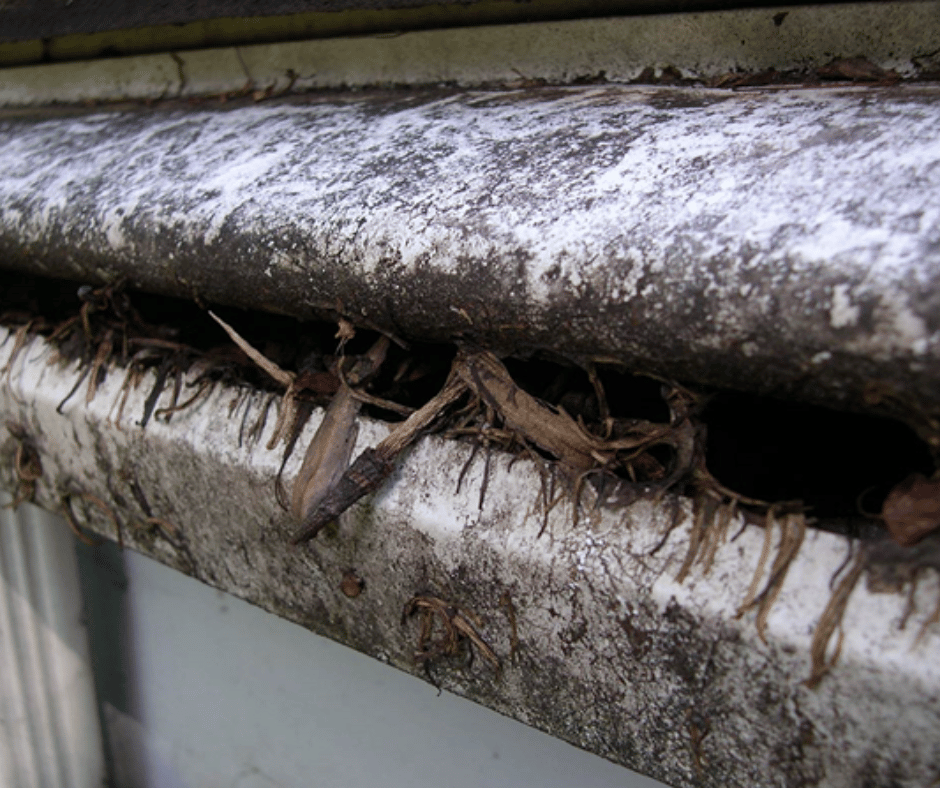
Over time, this buildup can break down into a dense, organic layer that restricts water flow, essentially turning the system back into a clogged gutter.
Difficult To Maintain And Even Harder To Remove
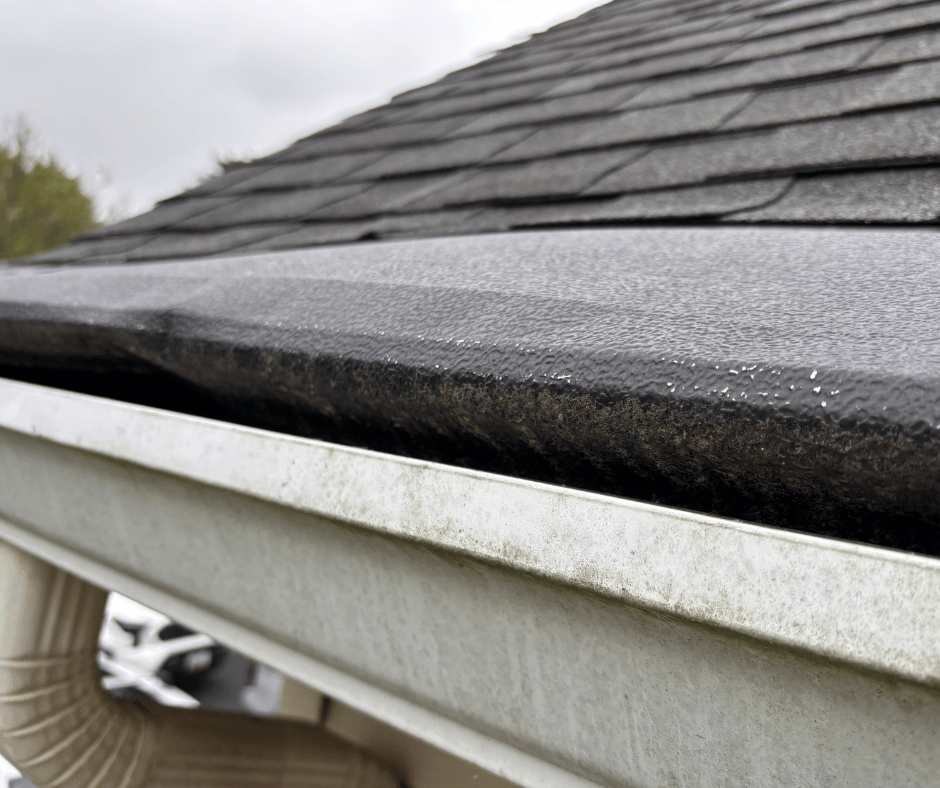
Once debris makes its way into a helmet or hood system, cleaning it out is not always as simple as it sounds. The hood covers the entire gutter, limiting access and making standard cleaning difficult. Servicing often involves working around the system or partially opening sections just to reach the buildup inside. Reverse curve systems are not designed to be opened repeatedly. The front edge can bend or lose with repeated service, and because the design depends on surface tension, small bends can affect performance.
With one-piece systems like Leaf Guard, Gutter Shutter, K Guard and similar designs, access is even more limited. In many cases, the only way to clear debris is by removing an end cap and attempting to flush the gutter out. If that doesn’t work, gutter sections may need to be removed to get the debris out, then reinstalled. Because of this, many local gutter companies do not service these systems at all.
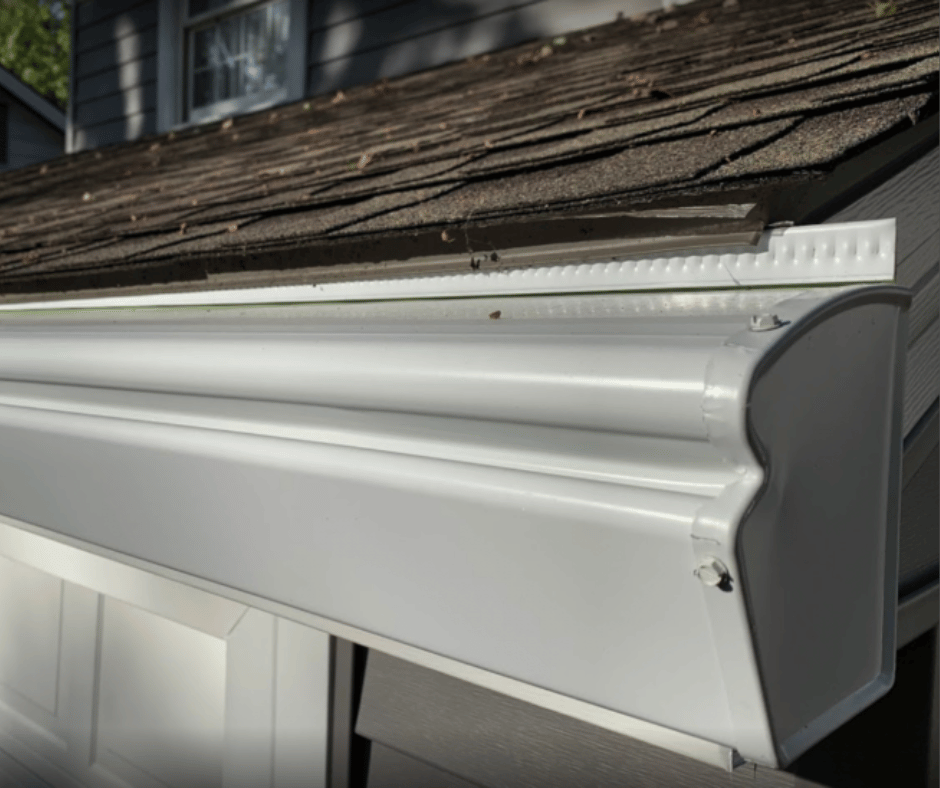
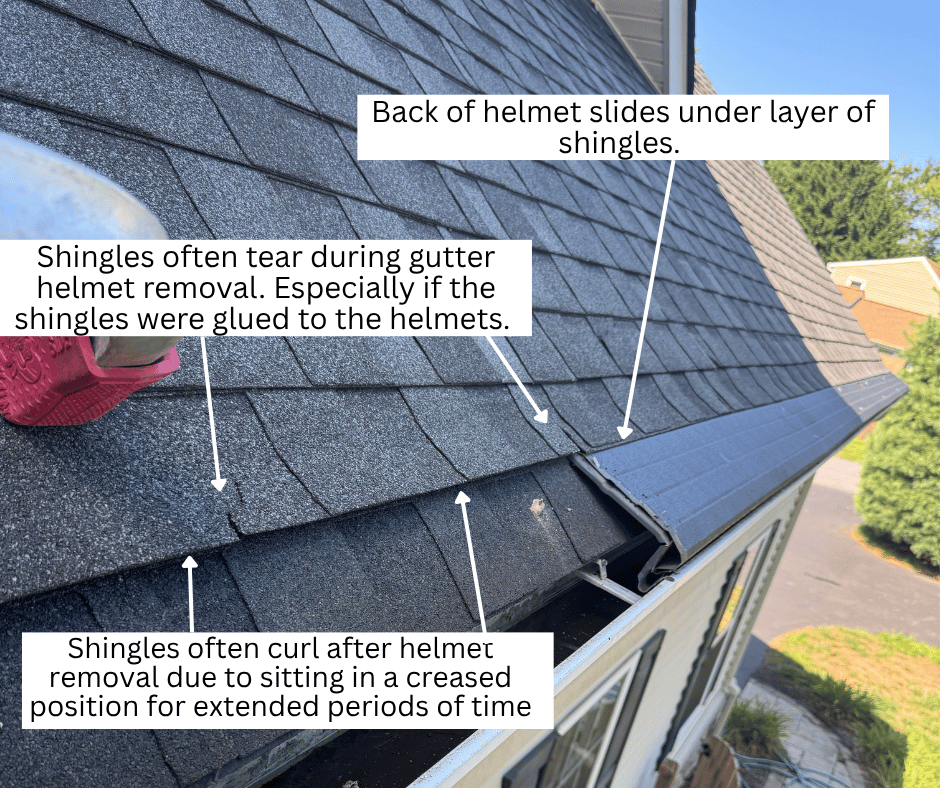
When homeowners get tired of dealing with overflow and ongoing issues associated with reverse curve systems and decide to go back to open gutters or a different style of guard, removal isn’t so simple.
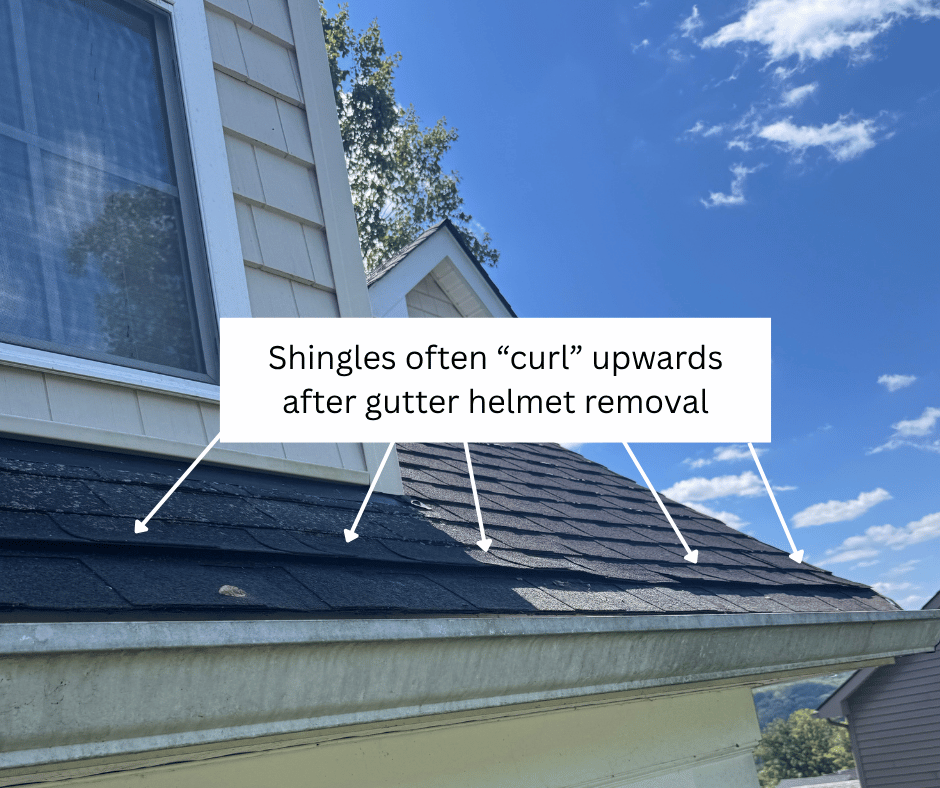
Helmet style systems are installed under the shingles and nailed through the roof deck boards, often around the entire perimeter of the roof. Removing them requires pulling shingles back to pry the nails, and in the process shingles can tear, loosen, or separate — especially if they’ve been glued in place. After removal, they may remain slightly curled from being held in a creased position, and previously covered areas can appear a different color.
Between the difficulty of cleaning, the limitations of servicing, and the labor involved in removal, what starts as a premium system meant to reduce maintenance can end up costing more in the long run when it’s time to take it off.
Attracts Pests (Birds, Bees, and Even Snakes)
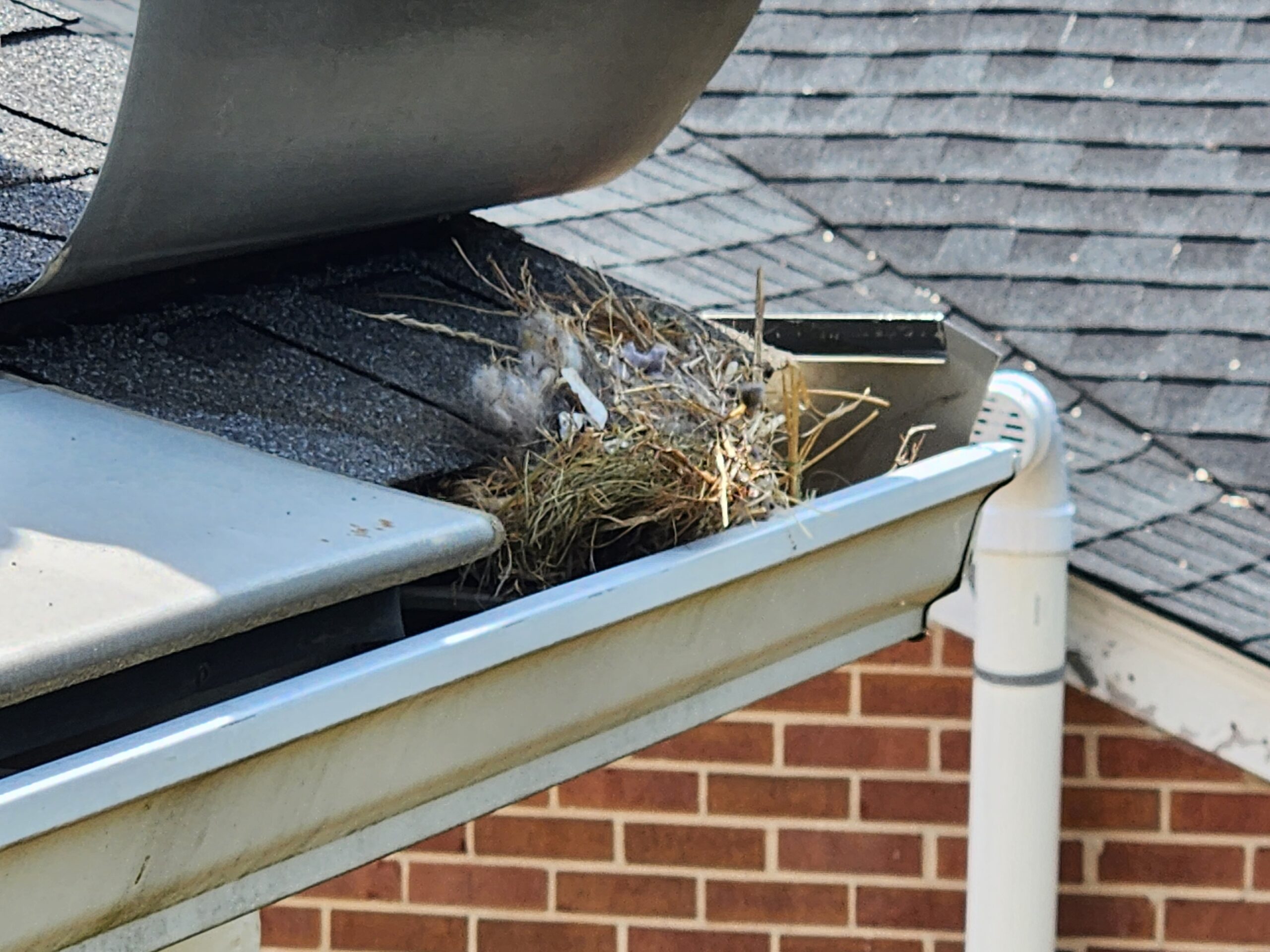
The design of gutter helmet systems creates an enclosed, sheltered space along the gutter line, making it an attractive place for pests to nest. The opening along the front edge provides just enough access for small birds, bees, wasps, and other animals to get inside, while the covered top offers protection from weather and predators. Additionally most gutter helmet style products feature a custom end cap that prevents birds from entering the system, but these end caps can come loose over time.
We commonly see small birds building nests inside reverse curve systems. The helmet provides the perfect cover from overhead predators. Once nesting material starts to collect, it can quickly lead to blockages and additional debris buildup.
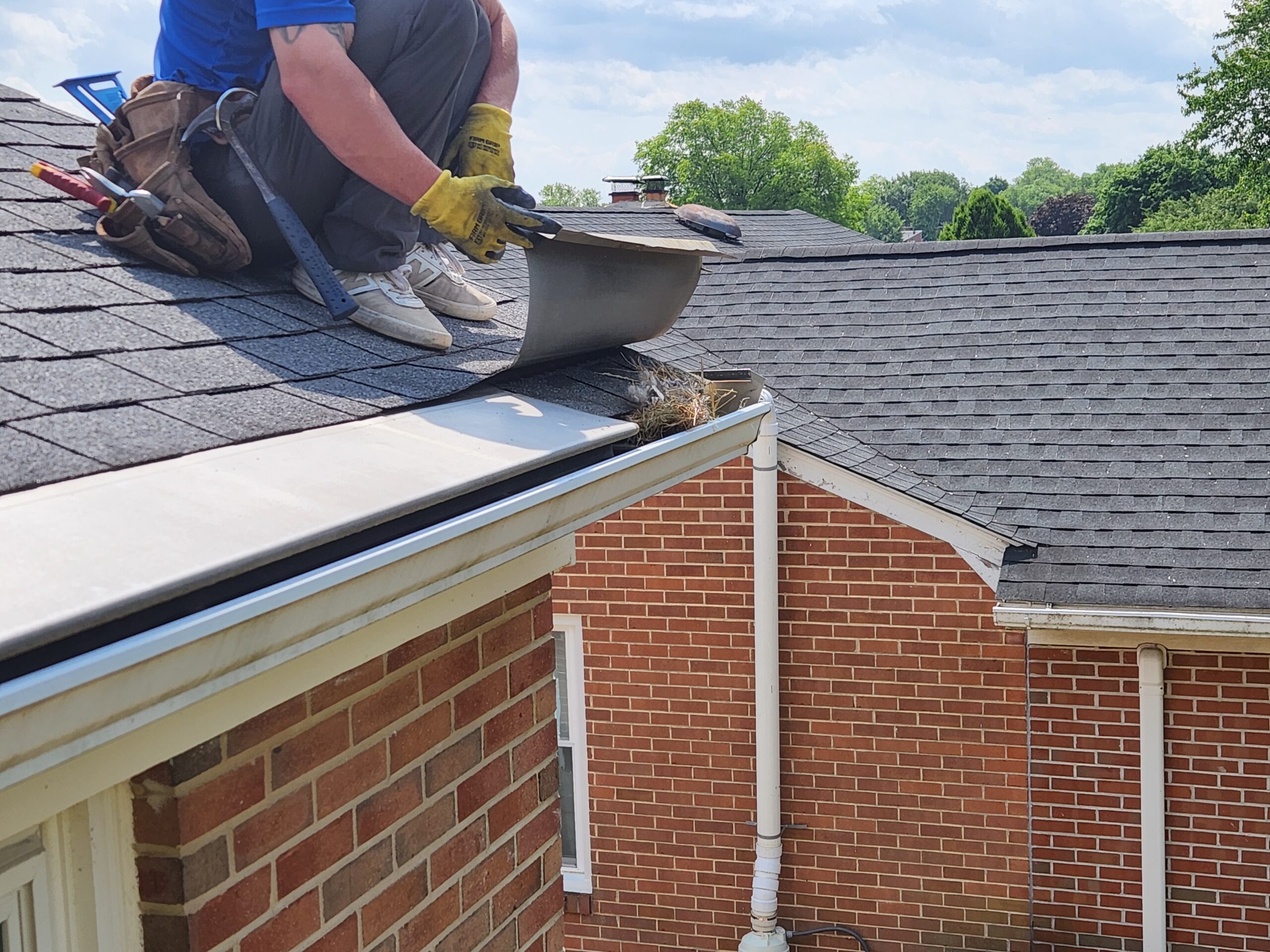
Bees and wasps are also a frequent issue. The protected cavity under the hood creates an ideal environment for hives, especially during warmer months. One of the biggest challenges is that these nests are often hidden. Homeowners may schedule a cleaning without realizing there is an active nest inside, and by the time it’s discovered, it’s usually too late — technicians are already dealing with an aggressive swarm or getting stung.
In some cases, larger pests get involved as well. We’ve seen snakes make their way into these systems, often drawn in by the presence of birds or other prey. Squirrels may not nest inside, but they also take advantage of openings, occasionally using the space for food storage or shelter.
Once pests move in, the system becomes harder to service, turning a simple gutter cleaning into a potential safety hazard.
Why These Systems Are So Common
After going through all of these issues, you may be asking yourself: so why are gutter helmet systems so popular?
A big part of it comes down to marketing and visibility. Many of these brands are among the largest names in the gutter industry, backed by significant advertising budgets. Their products are heavily promoted online and frequently recommended in videos, articles, and home improvement content where commissions are earned through affiliate sales. This level of exposure keeps these systems at the top of search results and in front of homeowners during the decision making process.
Reverse curve systems are also commonly sold as an upgrade during roof replacements, home additions, and remodels. For contractors, offering a gutter helmet system can significantly increase the value of a job compared to installing standard gutters, making it an easy upsell. Homeowners are often led to believe that because the product is so expensive, it must be the best option available.
With strong marketing, constant visibility, and widespread upselling, these systems end up on a large number of homes. Even though long-term performance isn’t always part of the conversation upfront.
Why We No Longer Install Reverse Curve Systems
We have installed most gutter helmet and reverse curve style systems in the past. Over time, we found ourselves returning to the same homes to deal with the same issues: water overflow, debris buildup, pest problems, and failure overtime. As those patterns became more consistent, it became clear that this style of system was not delivering the long-term performance homeowners were expecting.
At the same time, these systems are among the highest-priced gutter guard options on the market. In many cases, only Leaf Filter systems cost more, making Gutter Helmet the second most expensive product out there. When you compare that price point to the performance issues that tend to develop over time, it becomes difficult to justify the investment.
Another factor is how these systems are installed. Many of the well known brands operate through dealer networks, where the installation is subcontracted out to local companies. This almost always leads to situations where the installation is rewarded to the lowest bidder in the area. Therefore, the installations are usually not performed by highly rated professionals that you would expect with the advertising. You get the lowest bidder
After years of seeing how these systems perform in real conditions, we made the decision to stop installing them altogether. Now, when we come across gutter helmet systems, we typically recommend either removing them or replacing them with a more reliable option, especially when homeowners are already dealing with overflow, clogging, or ongoing maintenance issues.
What We Recommend Instead
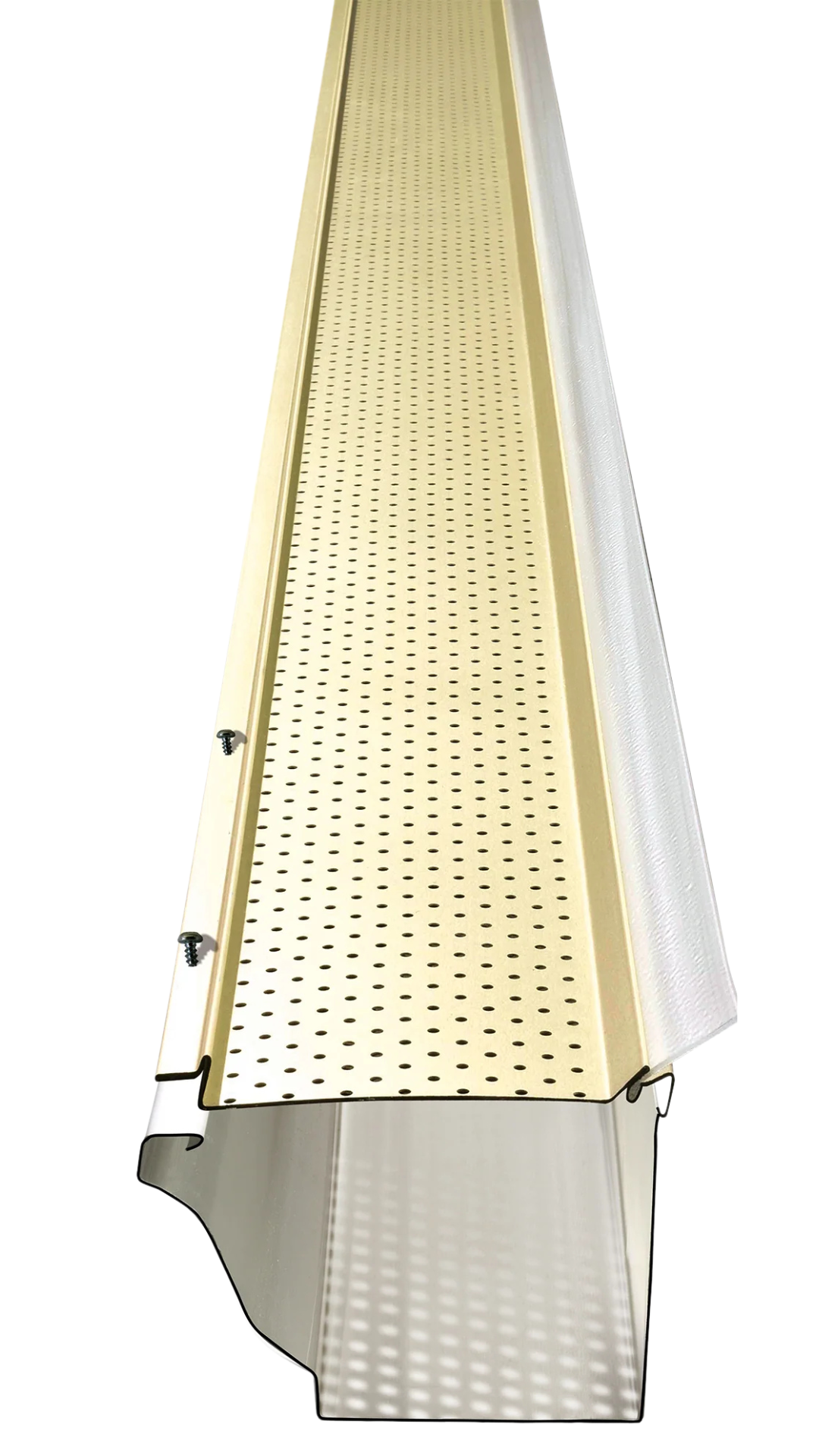
After years of working with nearly every style of gutter guard, we’ve narrowed our recommendation down to one option that consistently stands out, perforated aluminum gutter guards.
Unlike reverse curve systems, perforated aluminum guards attach directly to the top of the gutter and allow water to pass directly through the filter while keeping debris out. This approach eliminates the need for surface tension and avoids many of the performance issues that come with it.
In our experience, these systems:
- Keep debris out of the gutter more effectively
- Work better in heavy rain situations
- Are more durable and hold their shape over time without warping
- Perform well in snow and ice conditions
- Are easier to service when needed
- Do not tamper with roof shingles
The result is a system that performs consistently over time, without the same level of maintenance challenges or long-term issues.
We’ve intentionally avoided linking to any specific product here. Our goal is to provide an honest, experience based recommendation, not one influenced by commissions or affiliate sales.
If you’d like to learn more about how perforated aluminum gutter guards work, you can find more details here.
How We Handle Gutter Cleaning With Helmet Systems
When performing a gutter cleaning on a home with gutter helmet-style covers, our approach is focused on what can be serviced effectively without causing unnecessary damage.
Our standard service includes:
- Removing debris from the roof
- Clearing debris from the tops of the gutter helmets
- Opening the system at all downspout locations to remove debris from these areas and verify the downspouts are clear of obstructions
We do not include opening all sections of the gutter helmet system as part of a standard cleaning. This process is extremely time-consuming and can increase the risk of bending or damaging the front edge, which affects performance. If significant debris is found inside the system, additional fees may be required for proper removal. In those cases, pricing is handled on a case-by-case basis after a manager reviews photos provided by the technician.
It’s also worth noting , we don’t recommend gutter guard systems that allow debris into the gutter in the first place. At that point, they function more like debris traps than true protection.
When Gutter Helmet Style Systems Might Work
While gutter helmet systems have their limitations, there are situations where they may perform reasonably well. They tend to work best in environments with minimal debris, where there are fewer trees, and especially little to no pine needles. Smaller rooflines with simple layouts also help, as water flow is more controlled and easier for the system to manage.
Since helmets are prone to damage from the weight of snow and ice, warmer climate areas may not experience the same issues. Without the added stress from snow weight and freeze/thaw conditions, the system is less likely to deform over time.
Lower pitch shingle roofs can also improve performance, as water moves slower and is more likely to follow the curve as intended. Ideally a rancher or rambler style home with no roof valleys is where they would work the best.
In general, revers curve systems are better suited for:
- Homes that don’t have trees nearby
- Warmer climates
- Low pitched and simple roof layouts
Even in these situations, long-term performance still depends on maintaining the shape of the system and keeping debris from building up over time. In the right conditions, they can work, but those conditions are more limited than many homeowners expect.
Final Thoughts
When you hear the word “helmet,” you think of strength and protection. Unfortunately, when it comes to gutter systems, that name can be misleading.
Gutter helmet style systems are designed with good intentions, but as we’ve seen, their performance depends on very specific conditions. And over time, those conditions don’t always hold up. From water overshooting in heavy rain to debris buildup, pest issues, and difficult maintenance, the problems tend to show up gradually.
In many cases, homeowners end up dealing with more maintenance than expected, and eventually face the decision to repair, replace, or remove the system altogether. At the same time, these systems come at a premium price point. When you factor in the upfront cost along with the potential cost of servicing or removal, the long-term value becomes harder to justify. In some situations, you may be better off with open gutters than installing a system that introduces additional complications.
On the other hand, perforated aluminum gutter guards offer a different approach. Instead of relying on surface tension, they allow water to pass through directly while keeping debris out. Most importantly, they maintain their performance over the long term. They’ll perform the same in 20 years as they do when they’re brand new, something a gutter helmet owner will rarely say.
Related Articles:
How Much Money Do Gutter Guards Save? by My Gutter Doctor
Worst Gutter Guards : Products To Avoid by My Gutter Doctor
Best Gutter Guards For Pine Needles by My Gutter Doctor
Does Leaf Filter Work? by My Gutter Doctor
MY GUTTER DOCTOR
93 Monocacy Blvd. A6
Frederick, MD 21701
240-820-3209
Check out our reviews.


1 Comment
This was an amazing read!