


What Way Should Splash Blocks Face?
May 26, 2024
How Long Do Aluminum Gutters Last?
August 25, 2024
7 SIGNS OF IMPROPER GUTTER SLOPE
Improper gutter slope, also known as gutter pitch issues, is one of the most common causes of drainage problems in residential gutter systems.
Gutters are designed to be installed with a slight tilt so water flows toward the drains. When that slope changes (even slightly) water stops moving the right way and begins collecting in the wrong areas. In some cases, gutters can even become back-pitched, causing water to flow away from the drains instead of toward them. Once that happens, the gutter system can no longer drain properly. Water begins to collect, leak, overflow, and slowly cause damage to the gutters, fascia boards, and surrounding roofline.
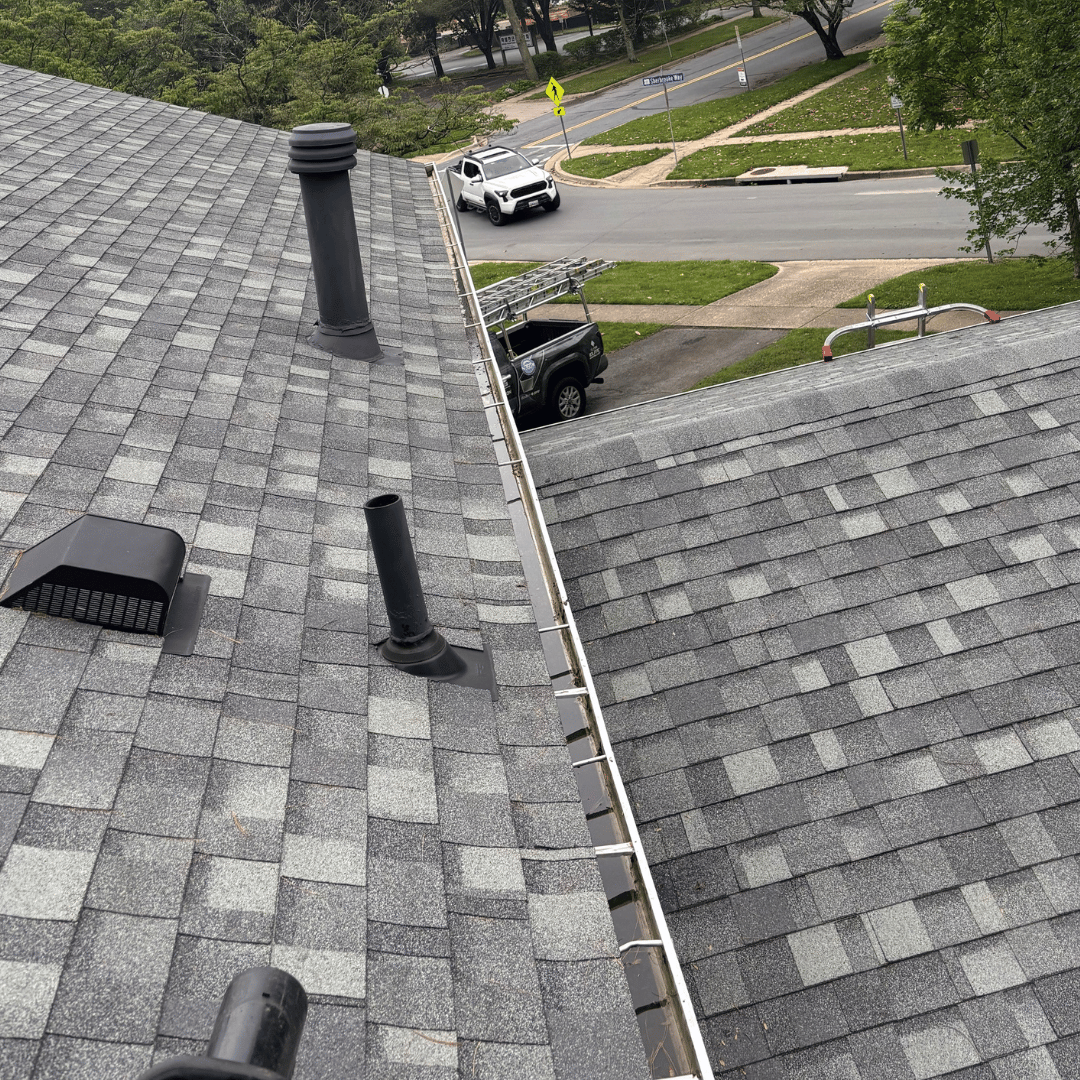
What Is Improper Gutter Slope?
Improper gutter slope occurs when gutters are no longer aligned correctly toward the drains, preventing water from flowing out of the system. When this happens, water begins collecting in certain areas instead of draining properly.
Since water cannot flow uphill, even a small change in alignment can cause water to settle in low spots, leading to leaks, overflow, and long-term damage.
Below are the most common signs of gutter pitch issues:
7 Signs of Improper Gutter Slope
-
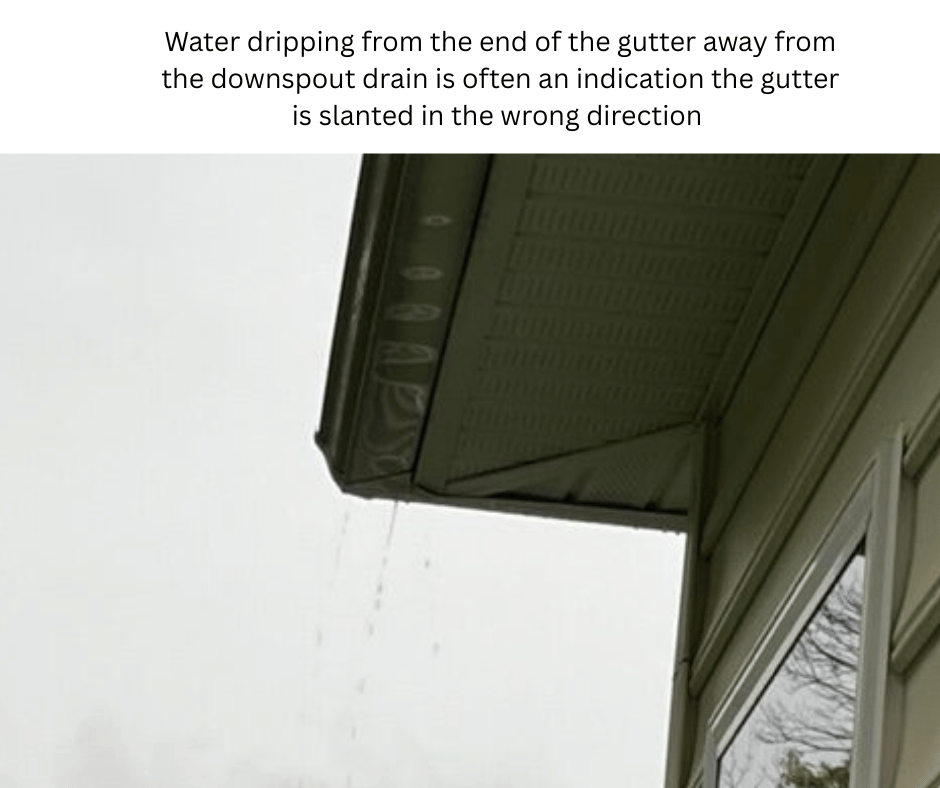
Water leaking from the end of the gutter opposite the drain
-
Leaking or dripping from gutter corners
-
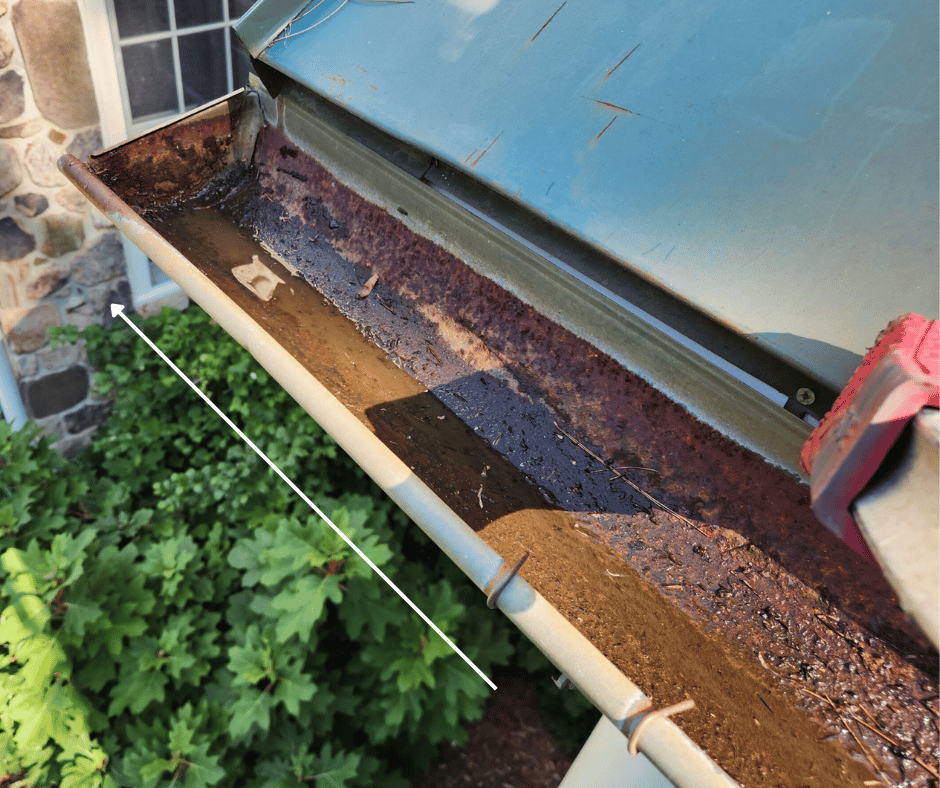
Standing water in the gutters after rain
-
Shingle grit or debris collecting in certain sections
-
Rust or corrosion forming in areas of the gutter
-
Gutters dripping long after rainfall has stopped
-
Heavy icicle formation during snow or freezing conditions
1. Water Leaking From the End of the Gutter Opposite the Drain
One of the most telltale signs that a gutter is sloped incorrectly is when water leaks from the end of the gutter opposite of the drain.
Water should always flow toward the drain, which is the lowest point of the gutter system. If you notice water leaking or dripping from the end opposite the drain, it means the gutter is no longer pitched correctly and water is moving in the wrong direction.
This issue often develops when a gutter bracket or spike begins to pull loose in that area. As the gutter drops slightly, water, debris, and shingle grit start to collect there. Over time, the added weight continues to pull the gutter down, gradually reversing the slope.
Once this happens, the gutter will begin draining away from the drain instead of toward it, leading to ongoing leaks, standing water in that section, and erosion at the ground below.
2. Leaking or Dripping From Gutter Corners
Leaking or dripping from gutter corners, especially hours after rain, is another indication the gutters are not sloped properly.
Gutter corners need to be aligned properly so water can make it around the corner and continue toward the nearest drain. When both gutter sections are not aligned correctly, water does not make it around the corner and often collects there.

In many cases, this happens when one or both connected gutter sections begin to sag or shift slightly. As the slope changes, water is directed toward the corner instead of continuing through the system. Since water cannot flow uphill, it becomes trapped in that at the corner.
Over time, the standing water will break down the sealant inside the corner, leading to leaks. As debris and shingle grit begin to collect in the corners, the added weight can make the problem worse, causing more water to settle in the corner and accelerate the failure.
If left uncorrected, what starts as a small drip at the corner can turn into consistent leaking, sealant failure, and further misalignment of the connected gutter sections.
3. Standing Water In the Gutters After Rain
Standing water in the gutters after rain is one of the clearest signs that the system is not draining properly. Gutters are designed to empty themselves shortly after rainfall ends. If water remains sitting in the gutter hours or days later, it usually means the slope is not allowing water to reach the drain.
This is most commonly seen in the end of the gutter opposite the drain, in the middle of long gutter runs, or in corners. These areas become low points when the gutter begins to sag or shift out of alignment. Since water cannot flow uphill, it remains trapped in those sections instead of draining out.
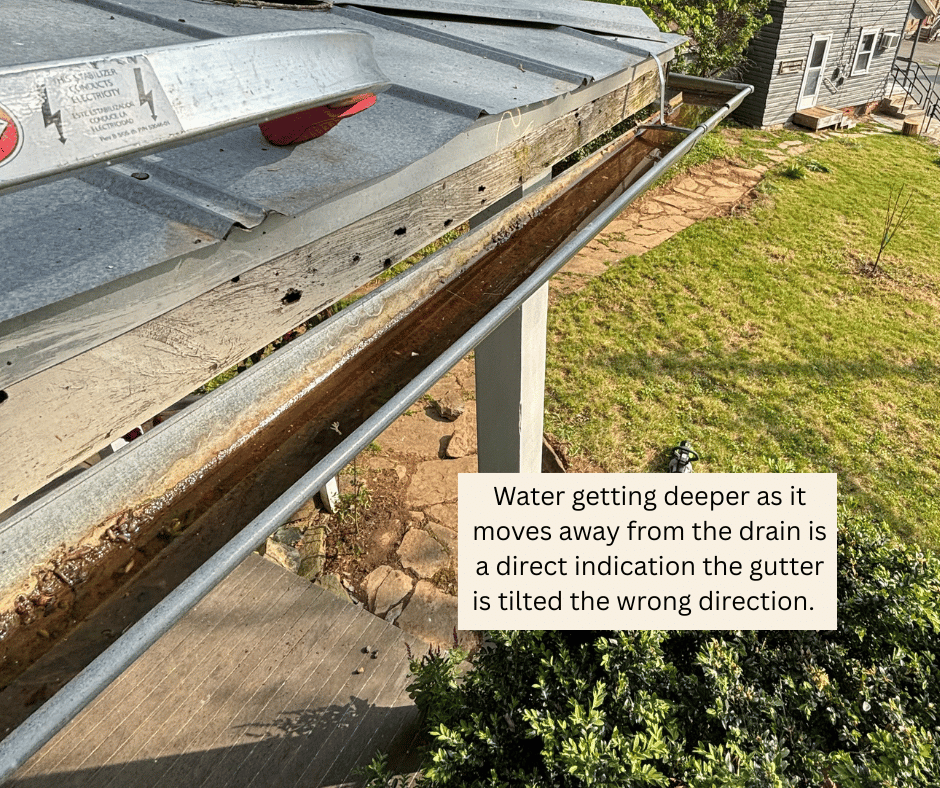
Over time, debris and shingle grit settle in these same areas, adding weight and making the problem worse. As more water collects, stress increases on the gutter brackets and fascia, which can eventually lead to further sagging and damage.
If left uncorrected, standing water can lead to gutter damage, corrosion, and eventual failure of the system, along with potential wood damage along the roofline.
4. Shingle Grit or Debris Collecting in Certain Sections
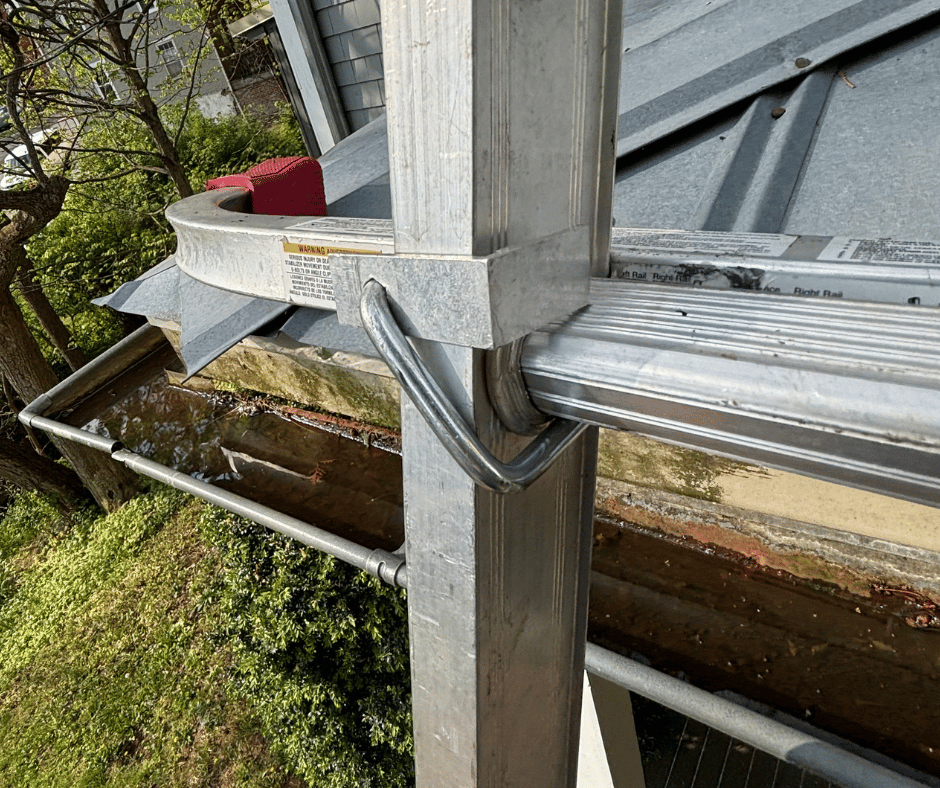
Shingle grit or debris collecting in certain sections of the gutter is often an early sign of improper gutter slope.
Shingle grit is heavier than most debris, so it naturally settles toward the lowest point in the gutter. When the slope is correct, that material will gradually move toward the drain. If it begins collecting in other areas, it usually means the gutter is no longer pitched properly.
Shingle grit collecting in the end opposite the drain, in corners, or in the middle of longer runs is an indication that water is collecting in those areas instead of flowing toward the drain.
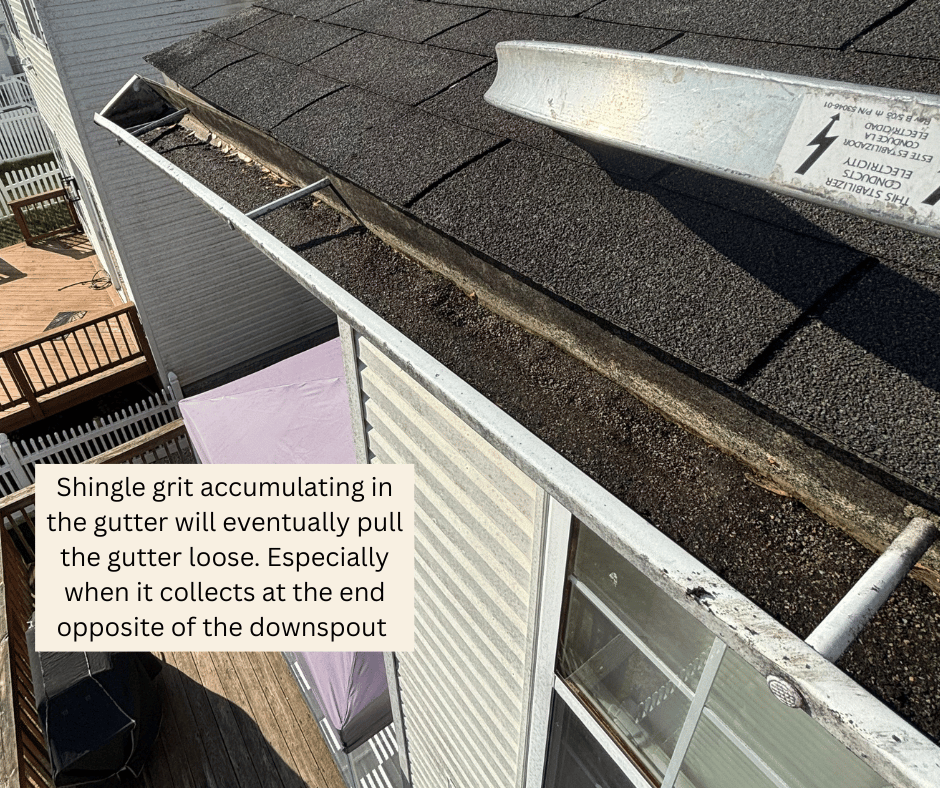
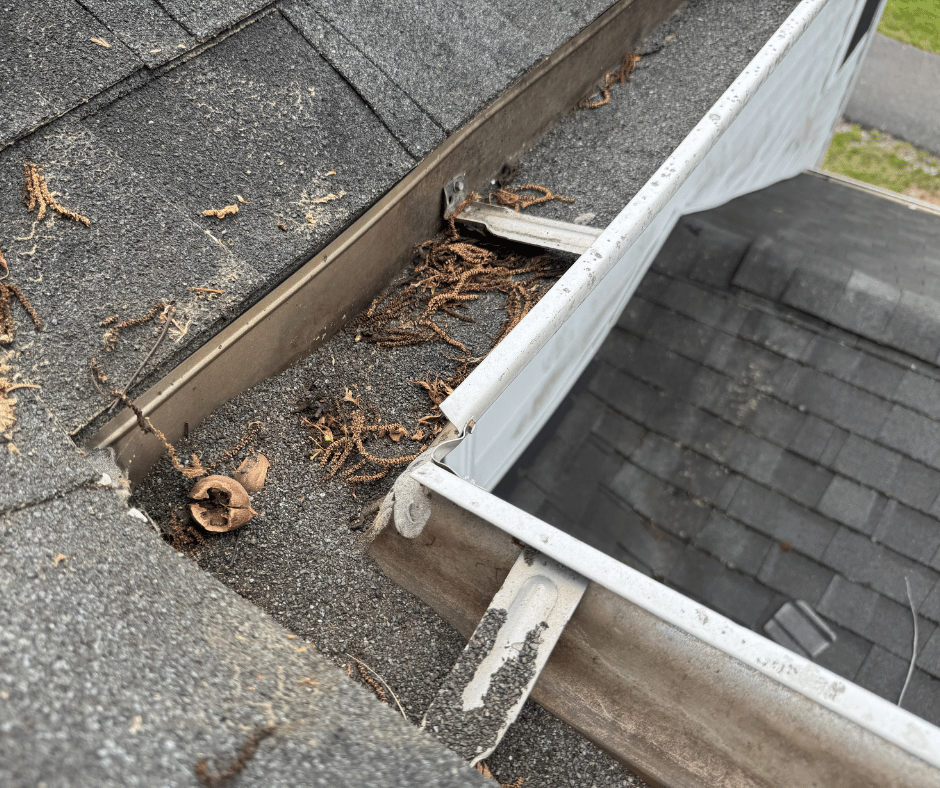
Over time, the buildup of shingle grit, debris, and water adds weight to that section of the gutter. This can cause the gutter to sag further, making the slope issue worse and leading to more accumulation in the same area. If left uncorrected, this cycle continues, eventually leading to the gutter pulling loose from the home or worse.
5. Rust or Corrosion Forming in Sections of the Gutter
Rust or corrosion forming in certain sections of the gutter is a strong indication that water has been sitting in those areas for an extended period of time.
When gutters are sloped correctly, water drains out and the system is able to dry between rain events. When the slope is off, water begins to collect in low areas and remains there. Over time, that constant moisture breaks down the protective coating on the gutter and leads to corrosion.
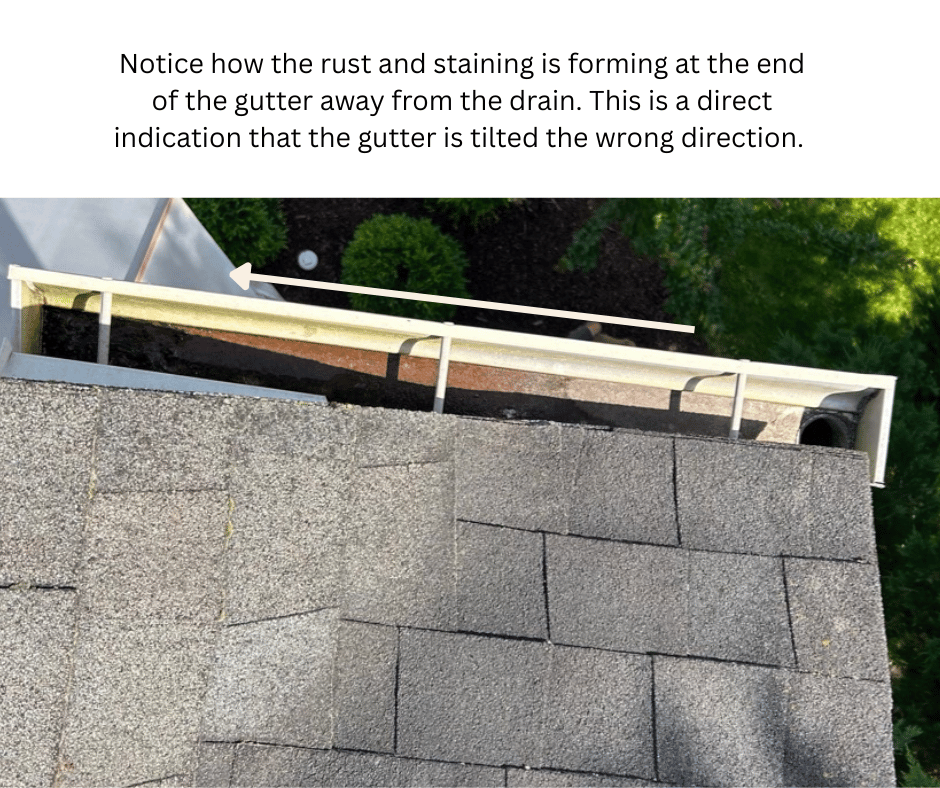
This is most commonly seen in the end of the gutter opposite the drain, in corners, or in the middle of longer runs—anywhere water is consistently collecting. In many cases, you’ll notice that the corrosion becomes heavier the farther away it is from the drain.
As the metal weakens, the gutter becomes more susceptible to leaks, sagging, and structural failure. What starts as discoloration can eventually turn into holes or complete failure of that section.
6. Gutters Dripping Long After Rain Has Stopped
Gutters dripping long after rain has stopped is a sign that water is still sitting inside the system.
Gutters are designed to drain completely shortly after rainfall ends. If they continue to drip for an extended period of time, it usually means water is being held in certain areas instead of flowing out through the drains.
This is often caused by low spots in the gutter where the slope has changed. Since water cannot flow uphill, it remains trapped in those sections and slowly drains out over time.
Dripping is most commonly noticed at the end opposite the drain, at corners, or in sagging sections of the gutter—areas where water tends to collect when the pitch is off.
While clogged gutters can also cause dripping, consistent dripping in specific locations is often an indication that the gutter slope is no longer correct.
7. Heavy Icicle Formation During Snow or Freezing Conditions

Heavy icicle formation on gutters during snow or freezing conditions is often a sign that water is not draining properly. When gutters are sloped correctly, melting snow and ice should flow toward the drains and exit the system. If the slope is off, water will collect in certain areas instead of draining, and that water will freeze as temperatures drop.
Icicles forming at the end opposite the drain, in corners, or in the middle of longer runs are an indication that water is collecting in those areas due to a sag in the gutter. As snow and ice melt, the same rules of gravity still apply- water cannot flow uphill.
As more snow melts and refreezes, ice continues to build in the same areas, leading to heavy icicles and added weight on the gutter system. Over time, this can cause gutters to pull loose, worsen the slope issue, and increase the risk of damage to both the gutter and the fascia board.
How Improper Gutter Slope Is Fixed
There are two main ways to correct improper gutter slope, depending on the condition of the gutter system and how the issue developed. Gutter slope adjustment or gutter replacement.
1. Gutter Slope Adjustment
In some cases, the slope of the gutter can be corrected by adjusting and re-securing the existing system.
This typically involves:
- Re-securing loose brackets or hangers
- Adjusting the alignment of connected gutter sections
- Restoring the slope so water flows properly toward the drain
Slope adjustment is usually most effective when the gutter system is in good condition and the issue is limited to minor sagging or misalignment.
Straight gutter runs are generally easier to correct, since the slope can be adjusted evenly from the high point toward the drain. Systems with fewer corners and solid mounting surfaces are also better candidates for adjustment.
2. Gutter Replacement
In other situations, adjusting the slope is not the most reliable long-term solution, and replacement is the better option.
This is often the case when:
- The gutters are older or worn out
- Multiple sections and corners are involved
- The gutter does not sit flush against the home (warped, dented, or wavy)
- The system has been repaired multiple times
- Gutters are installed with spike-and-ferrule fasteners
Because water cannot flow uphill, connected gutter sections must be aligned correctly as a whole. When multiple areas are out of alignment, adjusting one section alone will not fully correct the problem.
In many cases, the labor required to properly adjust an older or multi-section system is comparable to the cost of replacing it entirely.
Choosing the Right Solution
The best solution depends on the condition of the gutter system as a whole.
In some cases, a simple adjustment can restore proper drainage. In others, replacement provides a more reliable and long-lasting result.
The key is identifying the issue early—before minor slope problems turn into larger structural repairs.
Conclusion:
Improper gutter slope usually starts small but gets worse over time as water, debris, and weight continue to pull the gutter further out of alignment. As this happens, the damage compounds and becomes more noticeable.
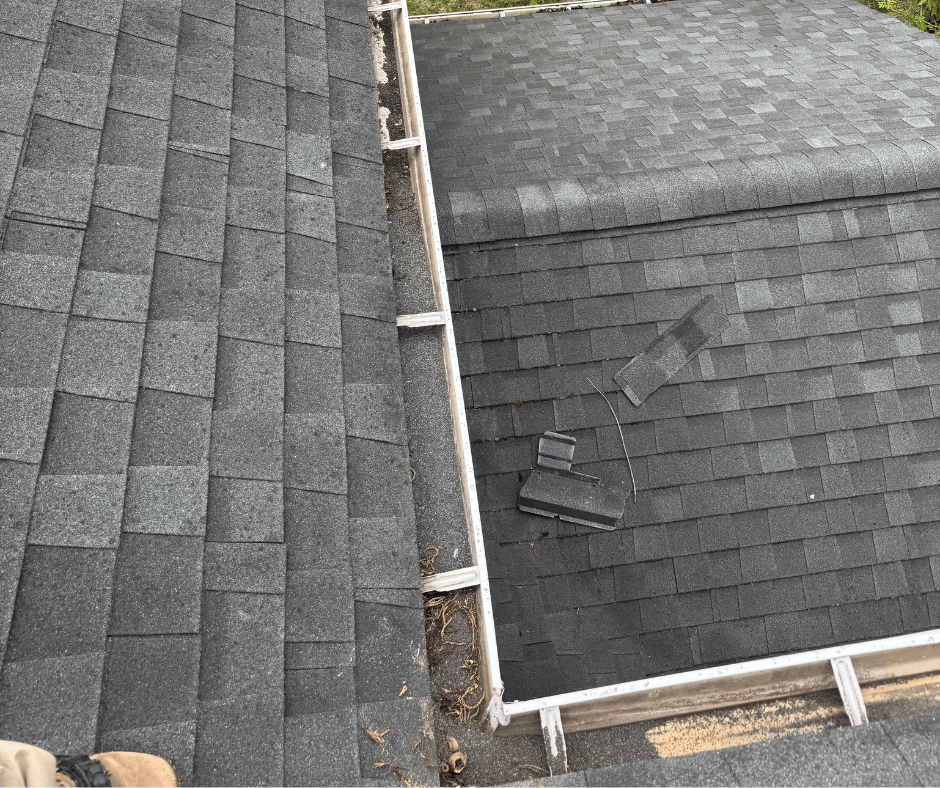
In many cases, it all starts with neglecting clogged gutters. When debris builds up, water is no longer able to drain properly. The added weight puts stress on the gutter brackets, eventually causing gutter sections to pull loose which leads to the alignment going out.
One of the easiest ways to spot pitch issues is by looking inside the gutter from a window or ladder. If you see staining, shingle grit, rust, corrosion, mud, leaves, or standing water collecting away from the drain, in corners, or in the middle of longer runs, there’s a strong chance the gutter is not sloped correctly.
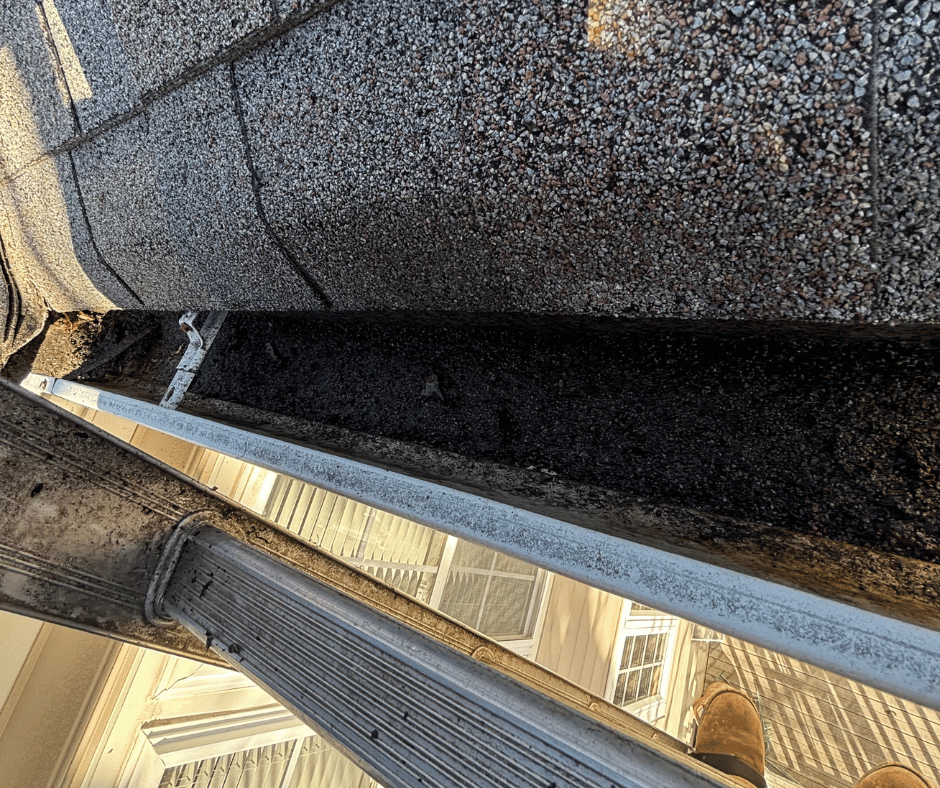
From the ground, you may also notice staining on the outside of the gutters, discoloration at corners or along sections, staining on the wall below, or signs of erosion and water pooling at the base of the home in those same areas. In some cases, water in the basement can also be traced back to gutter issues such as improper slope, clogs, or a combination of both.
Routine gutter maintenance (seasonal gutter cleanings) is the most effective way to prevent gutter pitch issues from developing.
RELATED ARTICLES BY MY GUTTER DOCTOR:
Gutter Pitch Adjustment Service Page
Loose Gutter Spikes by My Gutter Doctor
Fascia Board Rot by My Gutter Doctor
Gutter Corners Leaking? Why Gutters Leak & How To Fix by My Gutter Doctor
How Long Do Aluminum Gutters Last? by My Gutter Doctor
MY GUTTER DOCTOR
93 Monocacy Blvd. A-6
Frederick, MD 21701
240-820-3209



1 Comment
This is a very insightful post that highlights a problem many homeowners overlook until it becomes serious. The way you pointed out the warning signs of poor gutter slope makes it easy for anyone to understand and take action early. Proper water flow is so important, and ignoring it can lead to costly damage over time. Really appreciate how clearly this information is shared it’s both practical and eye opening!