
Gutter Pitch Adjustment
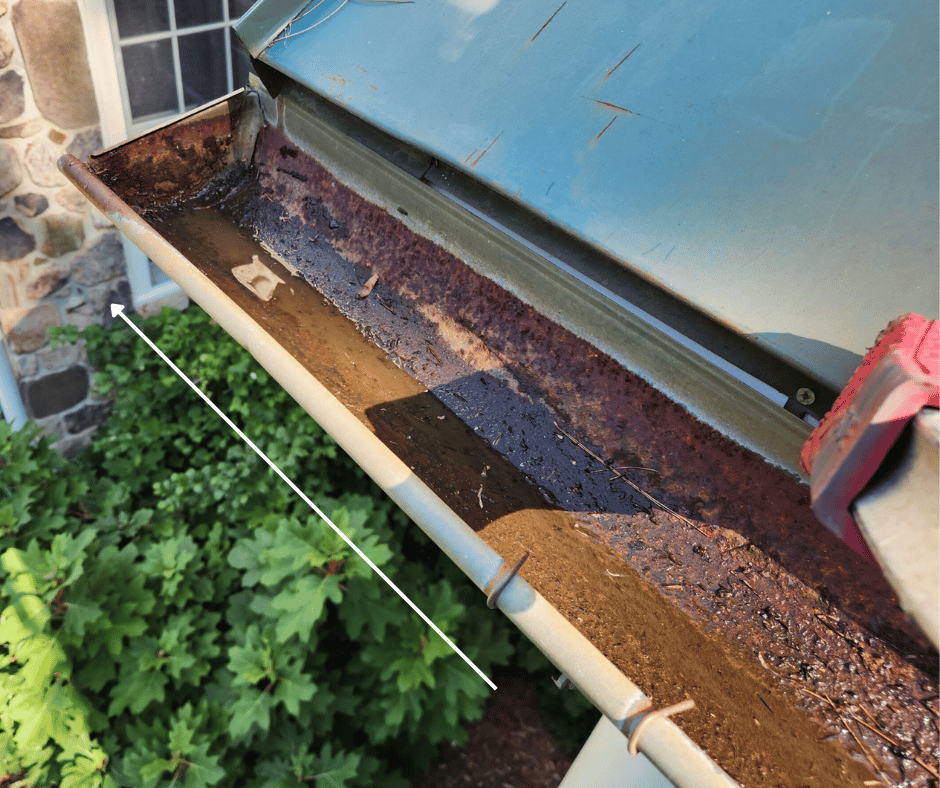
Gutter pitch is the term used to describe the slope gutters are installed at, allowing water to flow freely toward the drain locations.
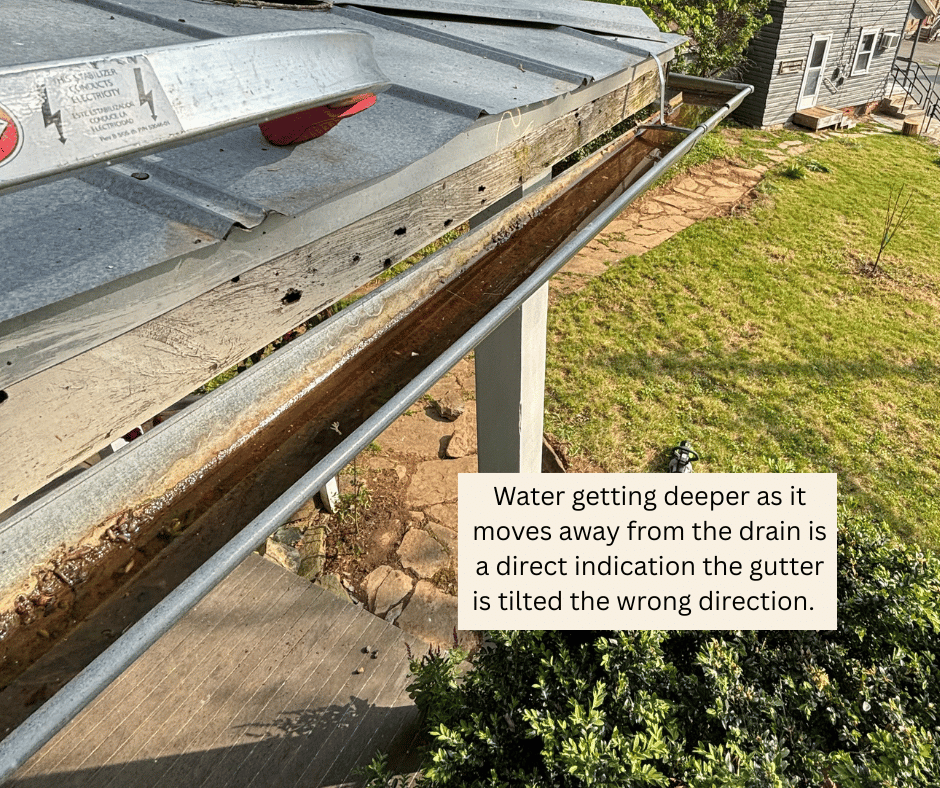
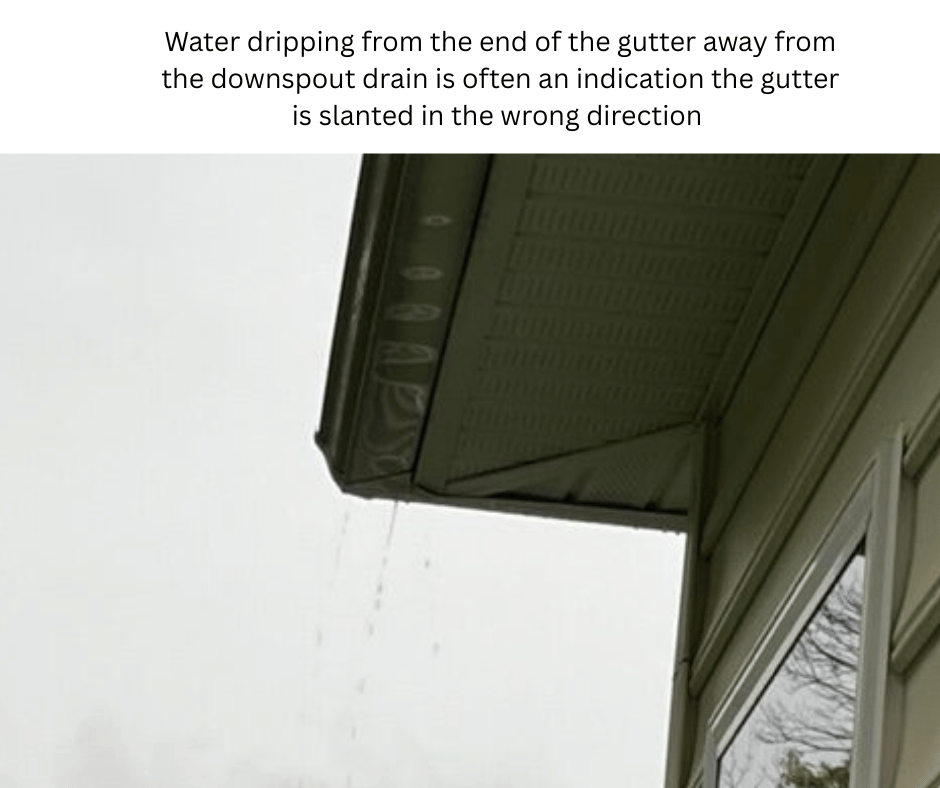
When that slope changes, even slightly, water will stop moving toward the drains and begin collecting in the wrong areas. Water cannot flow uphill, so even small changes in alignment can disrupt the flow throughout connected gutter sections.
Over time, the added weight from standing water puts stress on the gutter brackets, eventually pulling them loose or causing them to fail. Left uncorrected, pitch issues are one of the leading causes of gutter damage, fascia board rot, and other costly repairs around the roofline.
Correcting the pitch helps restore proper drainage, protect the gutter system, and reduce the risk of long-term structural damage.
How Improper Gutter Pitch Affects Your System
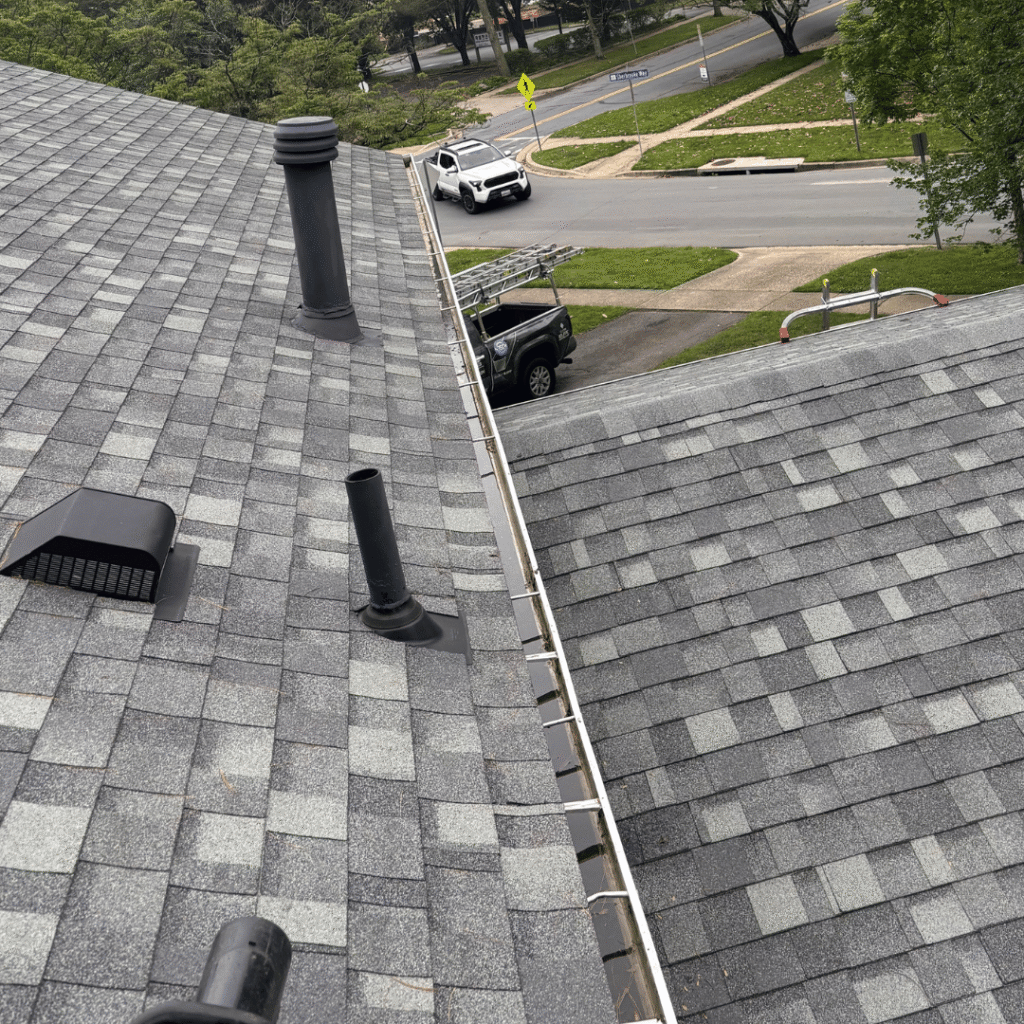
When gutters lose their proper slope, problems usually develop gradually rather than all at once. Certain sections begin to hold more water while others drain unevenly.
Since water cannot flow uphill, even a small change in slope will cause water to settle in low areas instead of reaching the drains.
Over time, this can lead to:
- Water collecting in sections of the gutter instead of draining
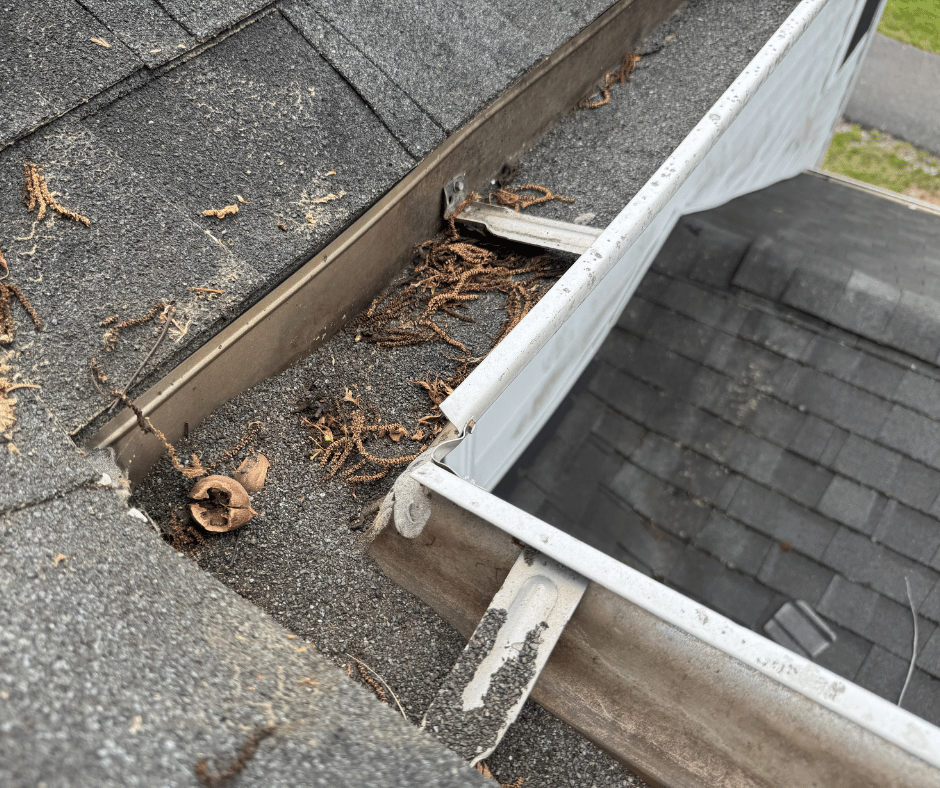
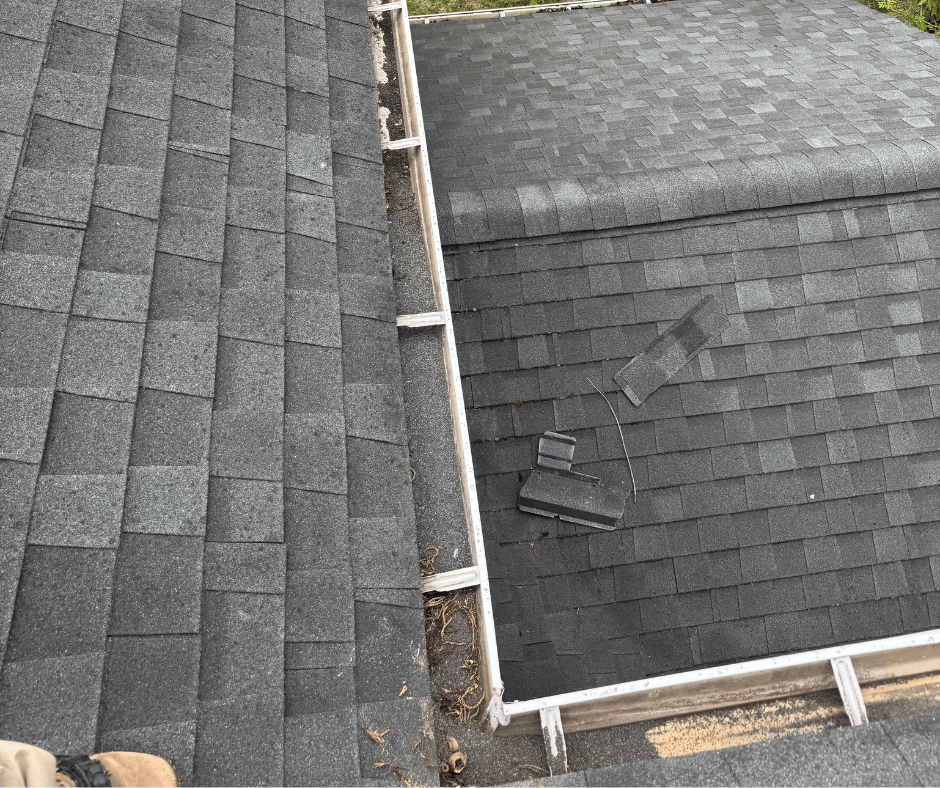
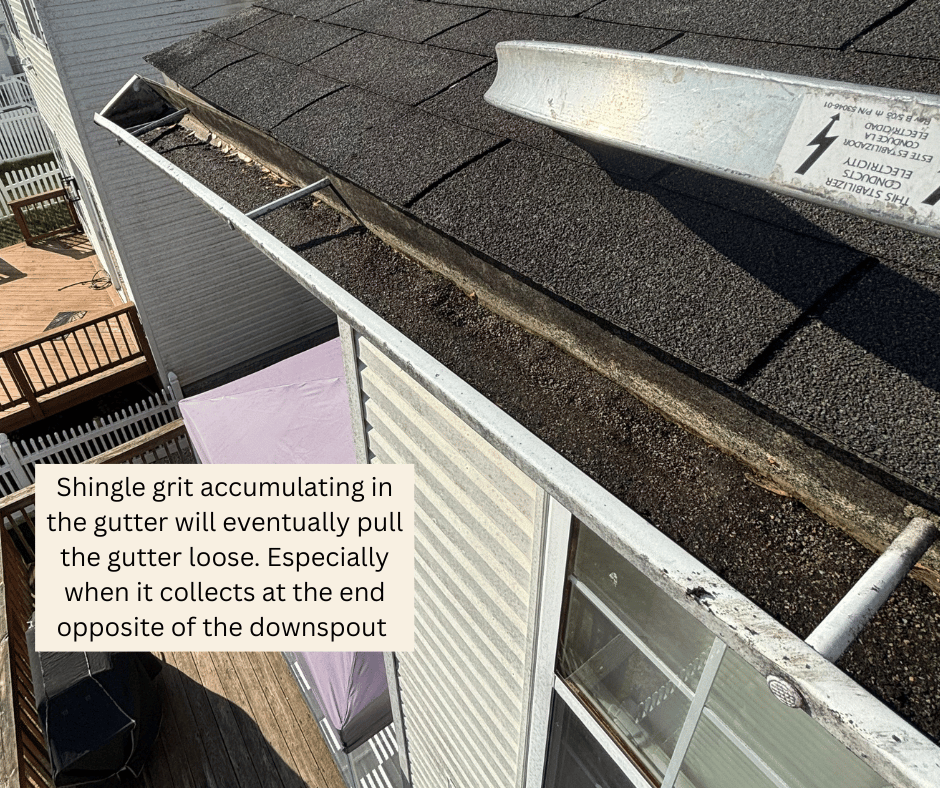
- Shingle grit and debris building up in high ends, corners, or sagging areas
- Standing water remaining long after rain
- Leaks or overflow at corners and seams
- Moisture exposure that leads to wood damage along the fascia
As water and debris continue to collect, the added weight can pull the gutter further out of alignment—making the problem progressively worse.
When Slope Adjustment Makes Sense
Adjusting the gutter slope can be an effective solution when the system is still in good overall condition and the issue is limited to alignment rather than structural failure.
This type of repair is most successful when:
- Gutters are mounted with screw-in hidden hangers or brackets
- The gutter system is in good overall condition
- The fascia board is solid and able to support adjustments
- The gutter sits flush against the home (not warped or wavy)
- Sealants at seams and corners are still holding
In these situations, correcting the slope can restore proper water flow and help extend the life of the system.
When Adjustment Is Not The Best Option
In many situations, adjusting the slope alone is not the most reliable long-term solution.
Replacement is often recommended when:
- The gutter systems are 20+ years old
- Gutters are installed with spike-and-ferrule fasteners (gutter spikes)
- Gutters do not sit flush against the home (warped, dented, or wavy)
- The gutter system has been repaired multiple times
- Bad craftmanship/improper installation
- Multiple sections or corners are involved
- Materials are weakened, rusted, or pulling loose
In some cases, slope issues are the result of improper installation. Gutters that were not installed with the correct pitch, were cut or aligned incorrectly, or were heavily over-sealed can create drainage problems that cannot be corrected through adjustment alone.
The more sections and corners a gutter system has, the more difficult it becomes to properly correct the slope throughout. Each section must be aligned together, and even small inconsistencies can prevent the system from draining correctly.
Because water cannot flow uphill, connected gutter sections must be aligned properly as a whole. When multiple areas are out of alignment, adjusting one section alone will not fully resolve the issue.
Because labor is the primary cost, adjusting slope on older or multi-section systems is often comparable to replacing them entirely.
Our goal is to recommend the solution that provides long-term performance, not a temporary fix.
Gutter Pitch & Older Spike-Mounted Systems
Older gutters installed with spikes (gutter nails) are generally not good candidates for slope adjustment.
These systems are more fragile and are often easily damaged during removal. Pulling spikes typically requires hammering the gutter spikes out of the wall, or by using a pry bar. Both can easily damage the gutter or leave holes that need to be sealed.
To properly reset the slope, the process usually involves:
- Removing the gutter from the home as delicately as possible
- Removing all gutter spikes
- Sealing old spike holes with sealant
- Re-sealing seams and end caps
- Installing modern gutter brackets
- Reinstalling the gutter at the correct slope
Because spiked gutters are easily damaged during the removal process. we typically do not attempt to adjust the slope of spike-mounted systems. In these situations, replacement is often the more efficient and reliable option.
Limitations of Gutter Pitch Adjustments
Correcting the slope can improve drainage, but it does not fix every issue.
- Not all systems can be perfectly re-aligned
- Multi-section gutters must be adjusted together
- Corners may require resealing
- Existing wear and age remain
- Structural issues may limit long-term results
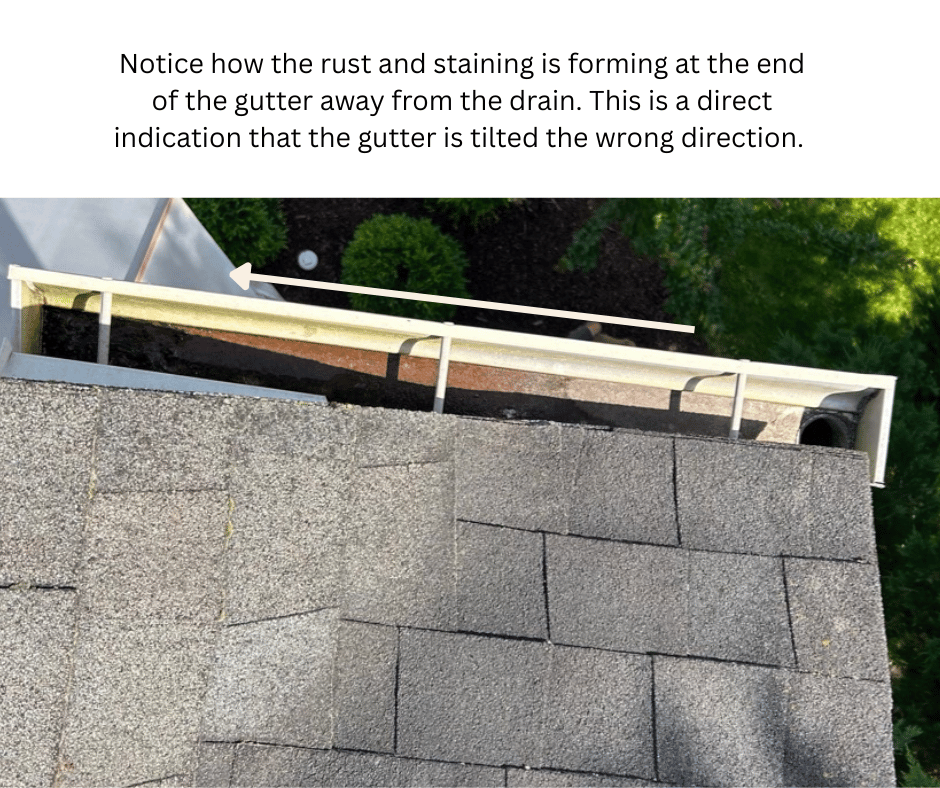
As homes settle over time, the direction of the roofline can shift, which may change the way water flows and affect the slope of the gutters.
Warranty & Expectations
Slope adjustments may include a limited warranty (typically 6–12 months), depending on the condition of the system.
However, this type of repair does not cover:
- Existing fascia board rot or wood damage
- Weak or aging materials
- Structural issues at the roof edge or mounting surface
Correcting the slope helps reduce water exposure and improve drainage, but it does not guarantee the condition of the existing structure.
Schedule a Gutter Pitch Inspection
Not sure if your gutters are draining properly?
Most slope issues are identified during gutter cleaning services or inspection visits, rather than being the original reason for the call. In some cases, homeowners reach out after researching the issue—but more often, it’s something we uncover during service.
Our team can perform a diagnostic inspection to determine whether the issue is related to slope, clogs, or structural problems—and recommend the most effective solution.